Local Self Government Institutions

Local Self-Government and the Panchayati Raj system in India. They trace grassroots governance from ancient village republics and colonial-era administrative reforms to post-independence developmental committees like those led by Balwant Rai Mehta and Ashok Mehta. Furthermore, the texts detail how…

Read More

State Executive

ndian state executive, focusing specifically on the structural responsibilities and expansive authorities held by the Governor, the Chief Minister, and the Council of Ministers. They detail how the Governor functions as the primary constitutional head of a state while exercising…

Read More

Constituent Assembly

Constituent Assembly of India, which was established under the Cabinet Mission Plan in 1946 to draft the nation’s constitution. They detail the indirect election process, overall membership distribution, and the vital role of specialized committees like the Drafting Committee led…

Read More

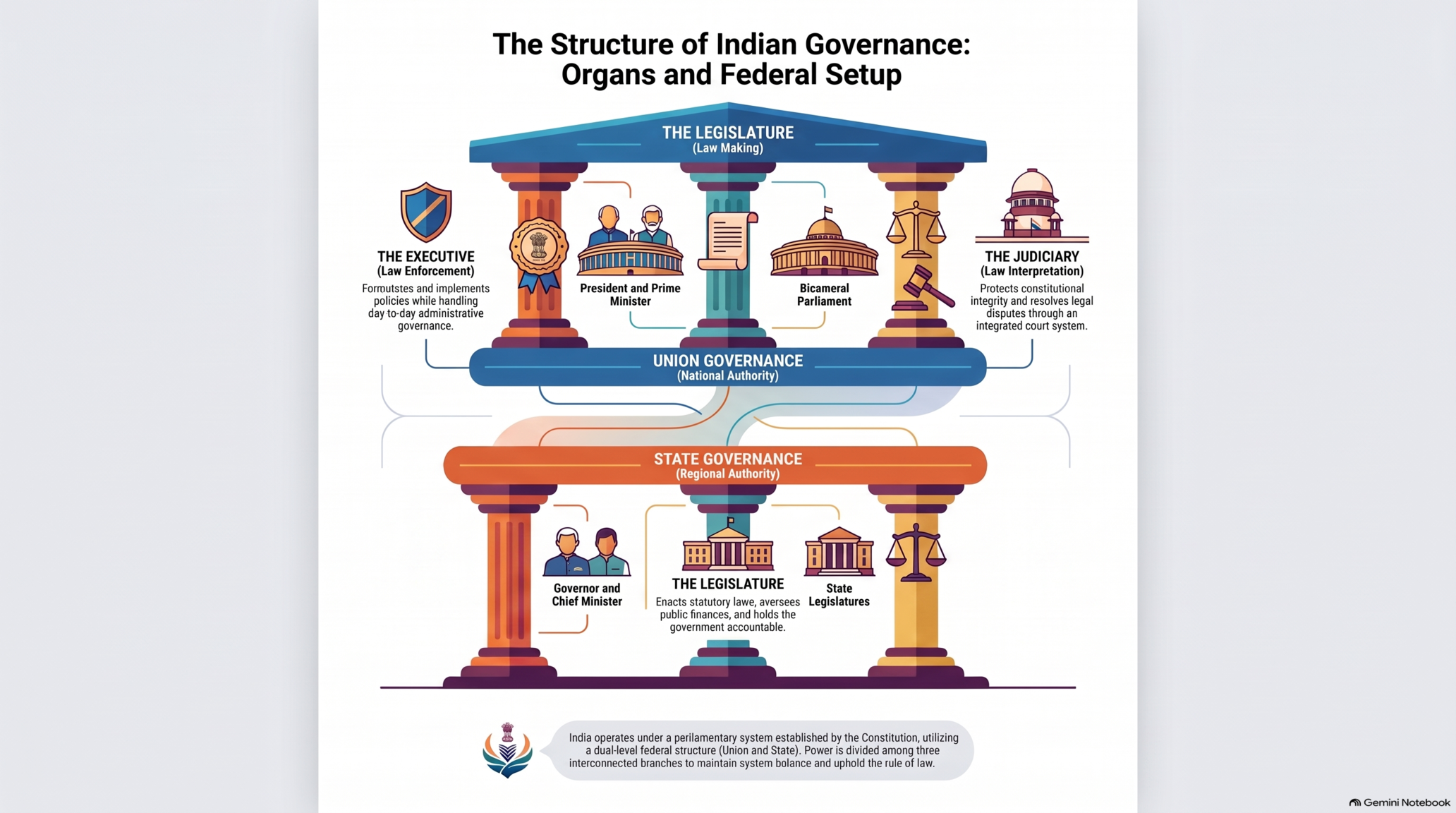
Structure of Governments

The provided sources detail the administrative framework of India, highlighting a parliamentary form of government that relies on a clear separation of powers among the central and state branches. They emphasize the structure and responsibilities of the Union and State…

Read More

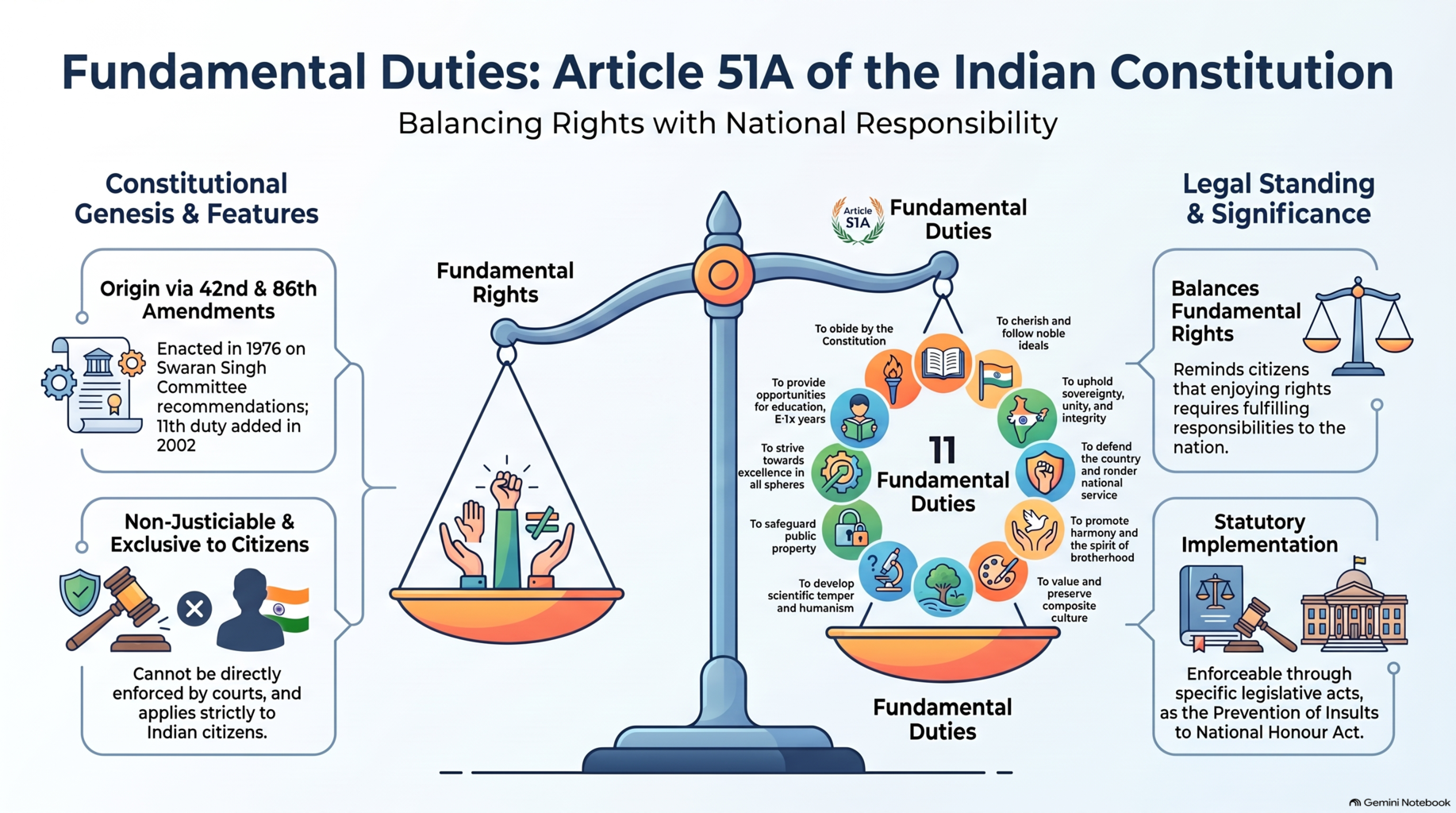
Fundamental Duties

Fundamental Duties enshrined in Article 51A and Part IV-A of the Indian Constitution, which serve as civic and moral obligations for citizens. Although these guidelines were absent from the original 1950 constitution, ten duties were subsequently incorporated via the 42nd…

Read More

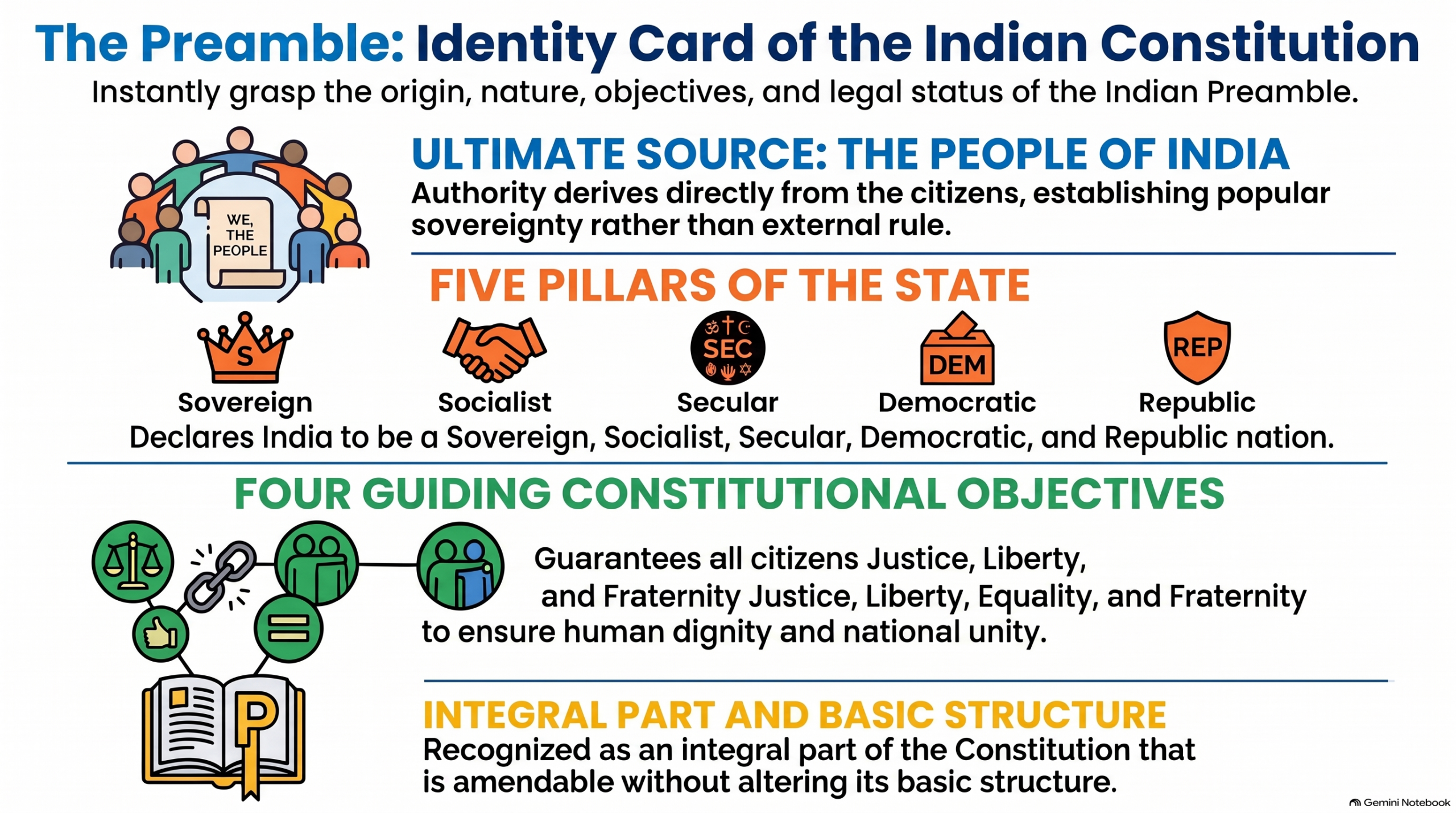
Preamble

Preamble of the Indian Constitution, detailing its foundational history rooted in Jawaharlal Nehru’s Objectives Resolution and its American inspiration. They explain the core structural components of the Preamble, including its declaration of India as a Sovereign, Socialist, Secular, Democratic Republic…

Read More

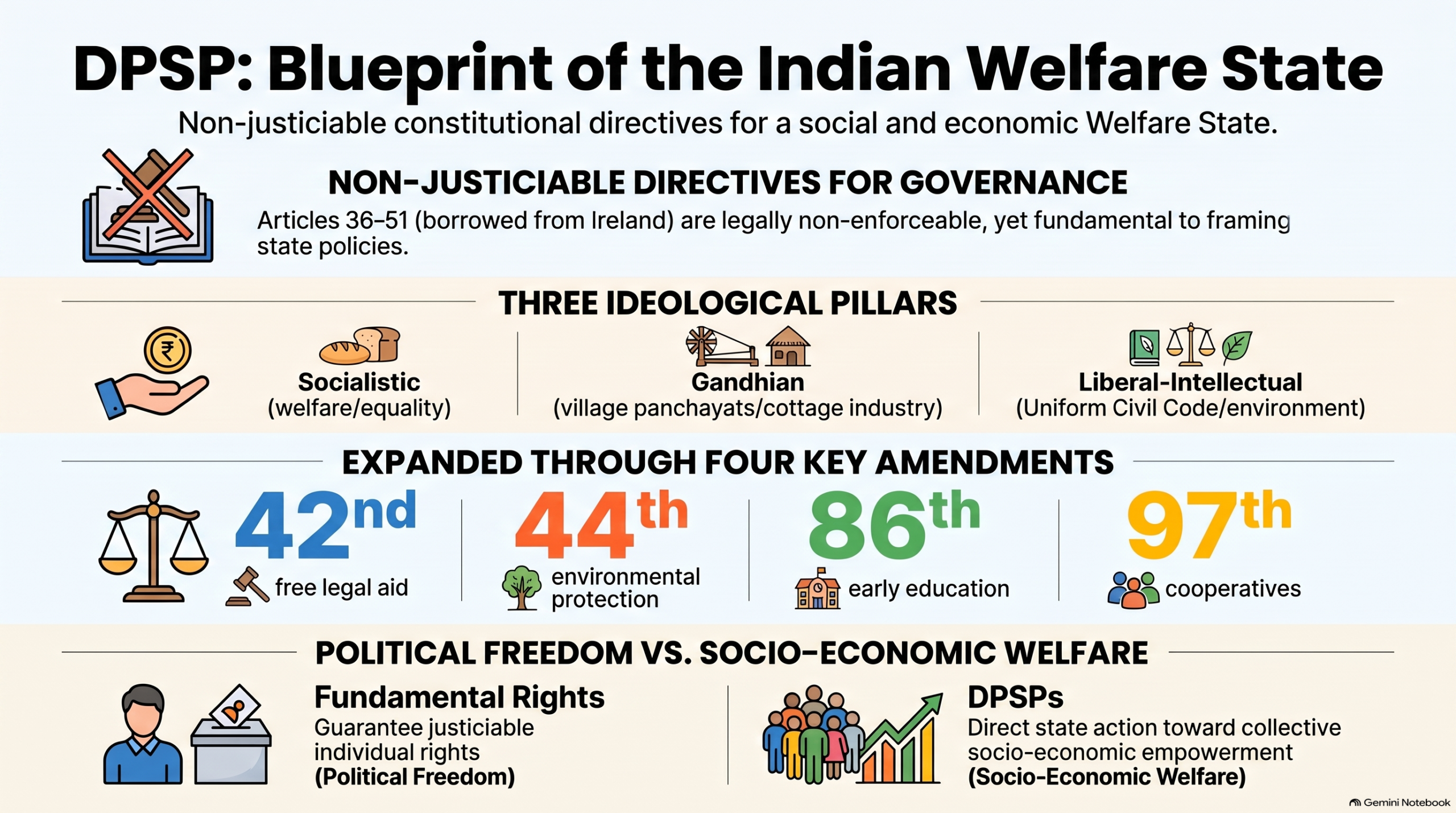
Directive Principles of State Policy

Directive Principles of State Policy are outlined in Part IV (Articles 36 to 51) of the Indian Constitution, drawing inspiration from the Irish Constitution. These guidelines are non-justiciable and cannot be enforced through courts, yet they remain fundamental to governance…

Read More

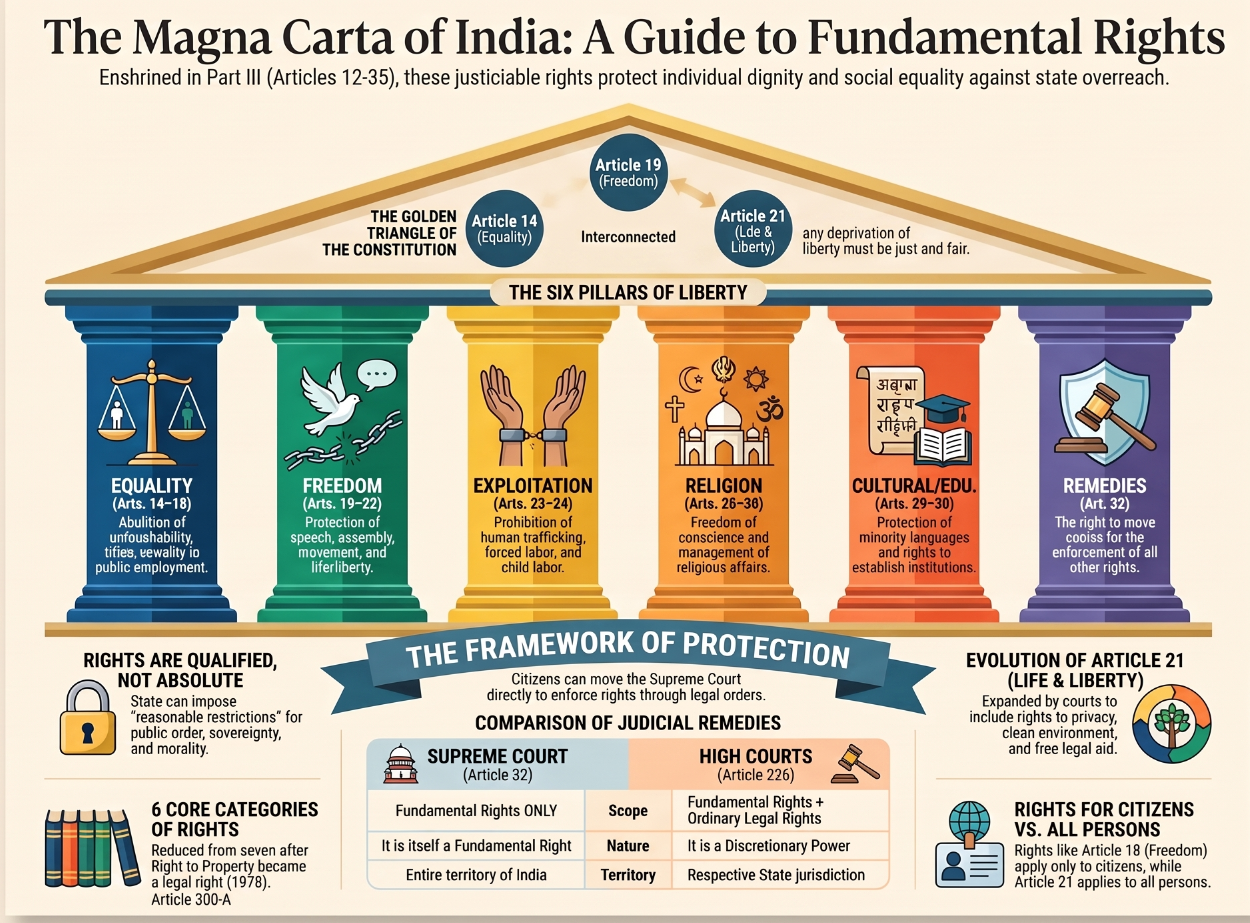
Fundamental Rights

Fundamental Rights enshrined in Part III of the Indian Constitution, detailing specific guarantees such as the Right to Equality, Right to Freedom, Right against Exploitation, Right to Freedom of Religion, and Cultural and Educational Rights. These constitutional provisions are designed…

Read More