Fundamental Rights



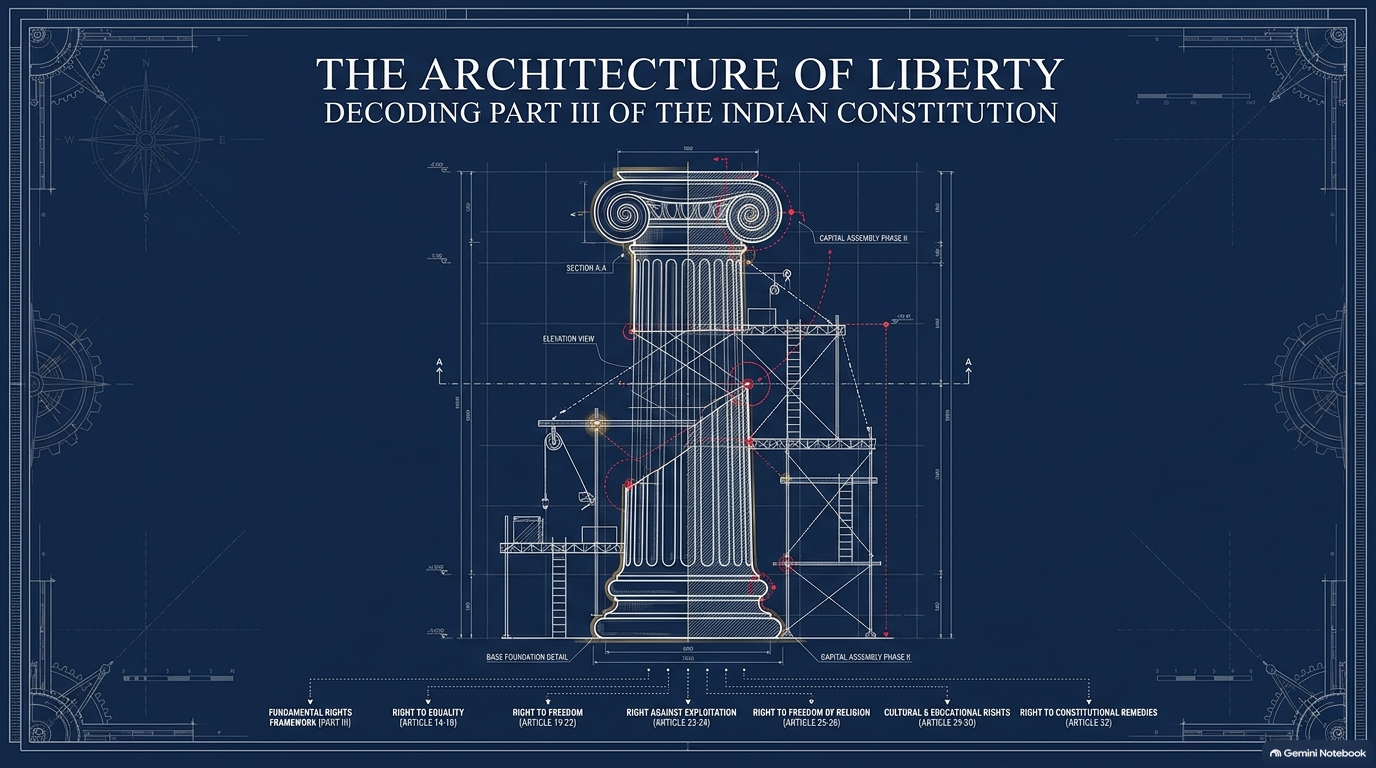



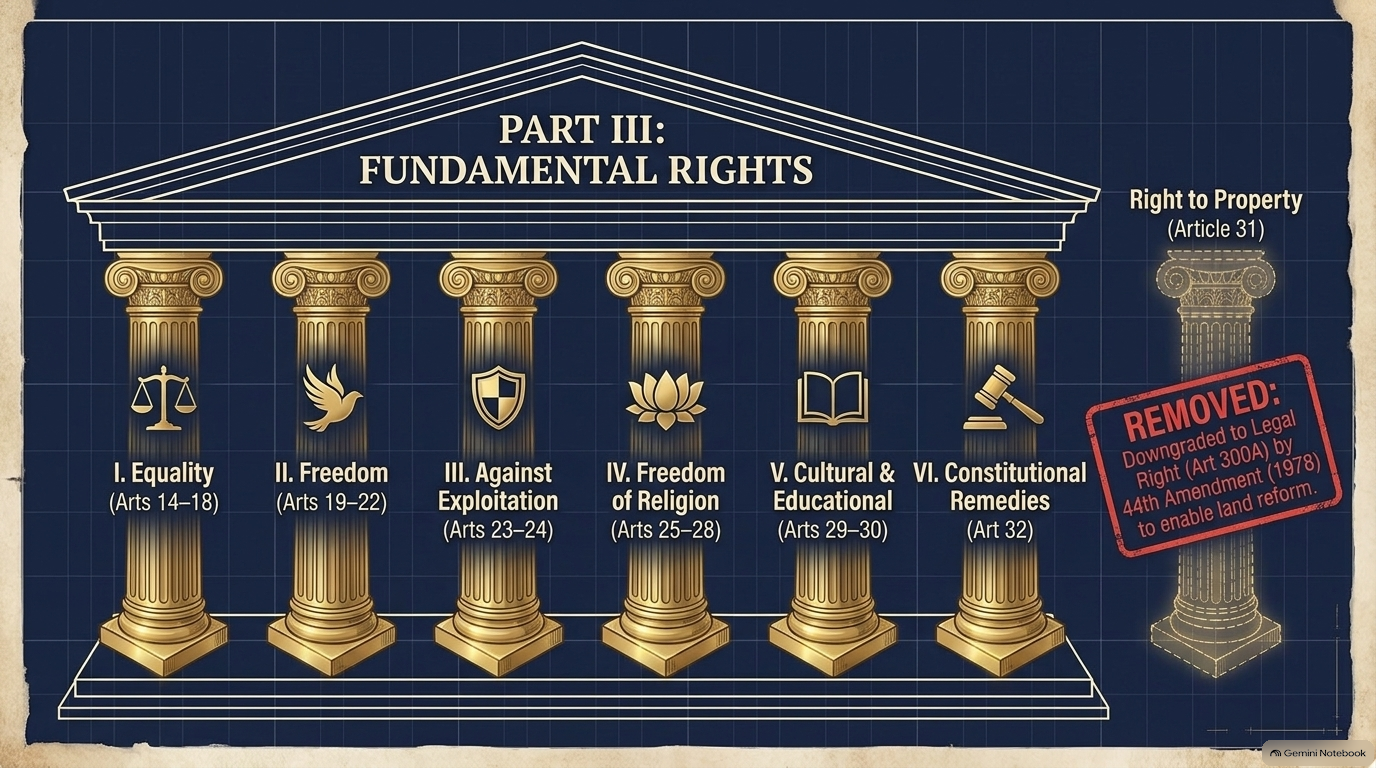
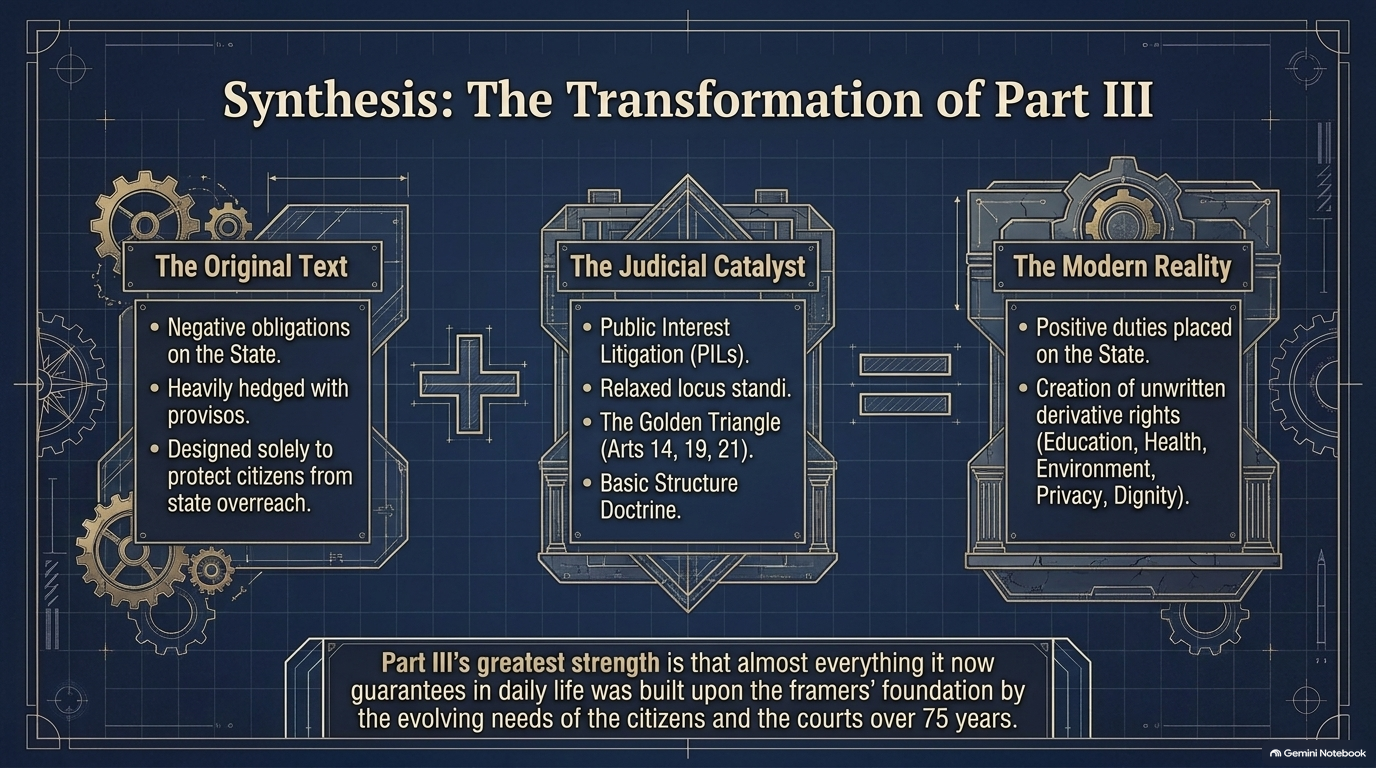
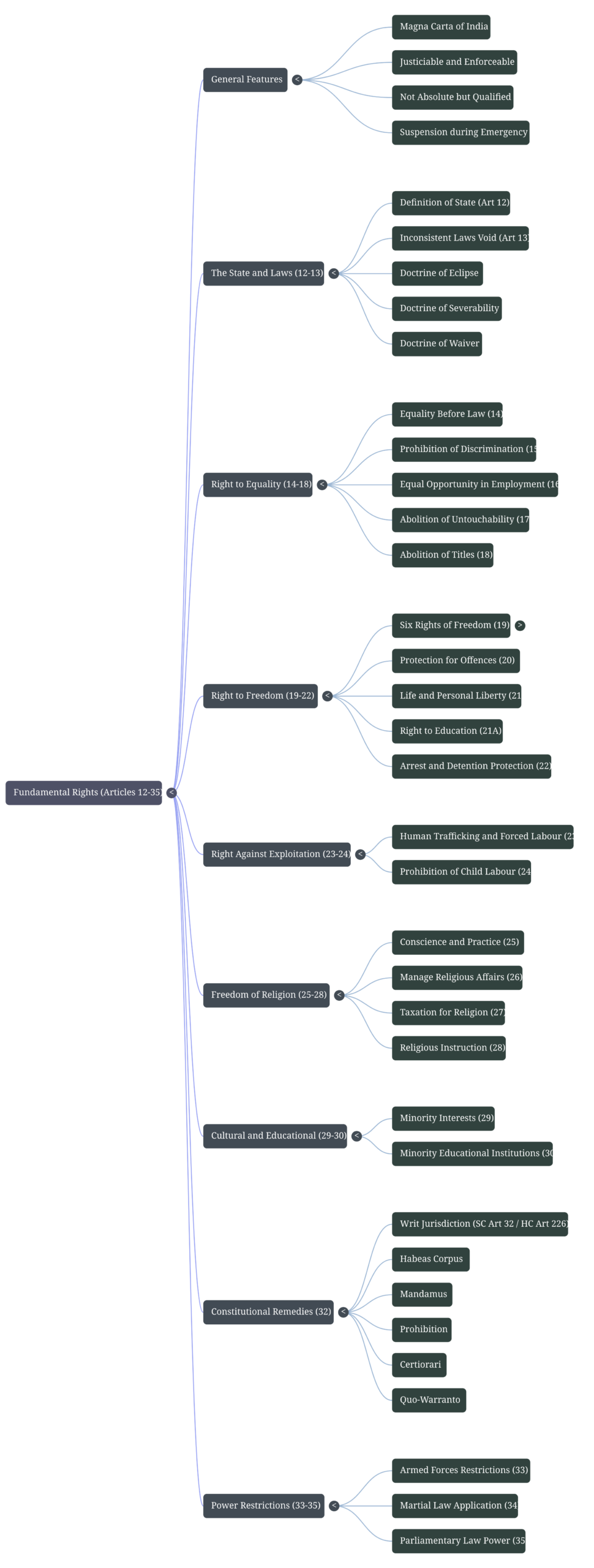
Fundamental Rights enshrined in Part III of the Indian Constitution, detailing specific guarantees such as the Right to Equality, Right to Freedom, Right against Exploitation, Right to Freedom of Religion, and Cultural and Educational Rights. These constitutional provisions are designed to protect individual dignity, ensure social justice, and safeguard minority interests while remaining subject to reasonable state restrictions, judicial review, and potential suspension during national emergencies. Furthermore, the texts highlight key historical and legal mechanisms like writ jurisdiction, the evolution of legal protections such as the Right to Property, and the overarching philosophical view that these guarantees impose negative obligations on the state to prevent encroachments on personal liberty.
The Fundamental Rights enshrined in Part III (Articles 12–35) of the Indian Constitution balance individual liberty with state authority by ensuring that rights are qualified rather than absolute[1]. The constitutional framework avoids both state authoritarianism and unrestrained individualism by pairing civil liberties with explicit grounds for restriction, judicial review, and procedural safeguards
1. Qualified Rights via Enumerated Restriction Grounds
Rather than declaring unlimited rights, the Constitution explicitly details the conditions under which the state may impose restrictions[1]:
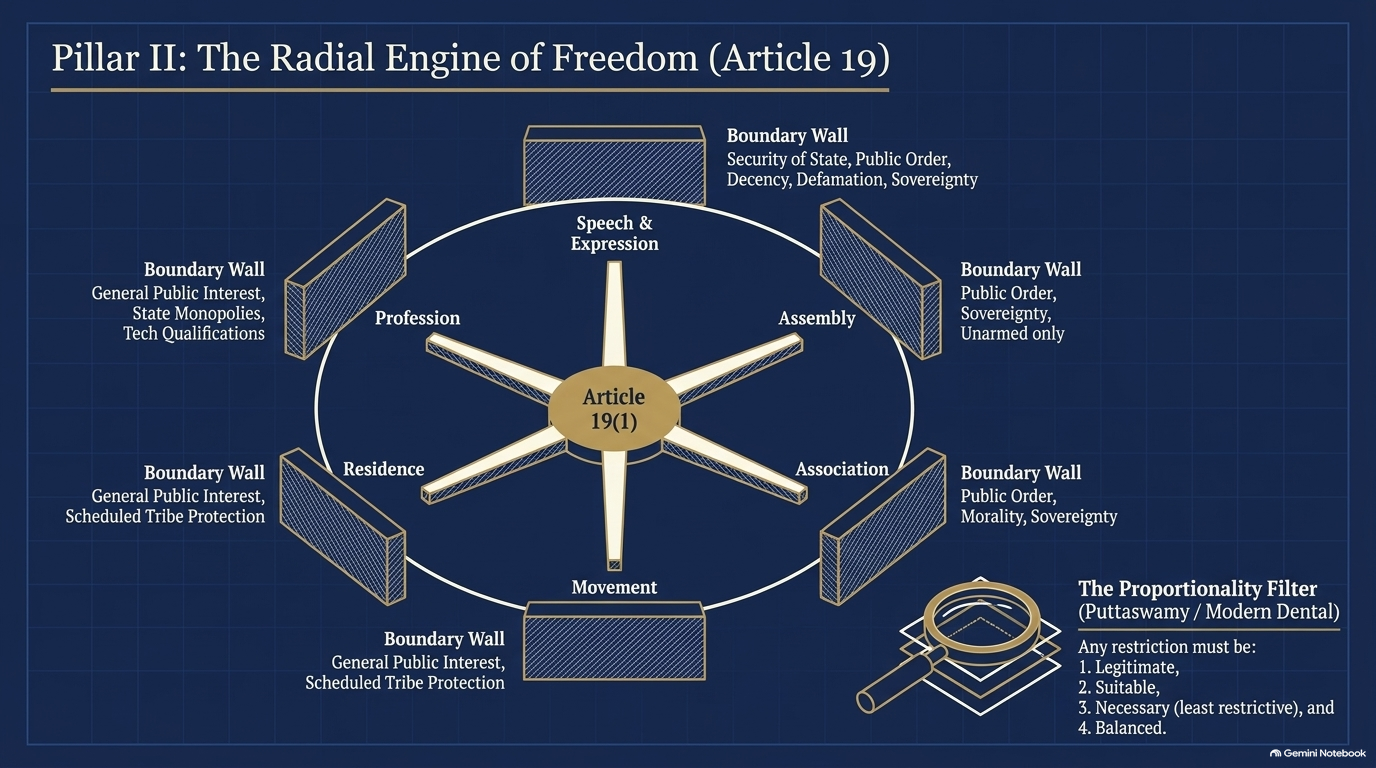
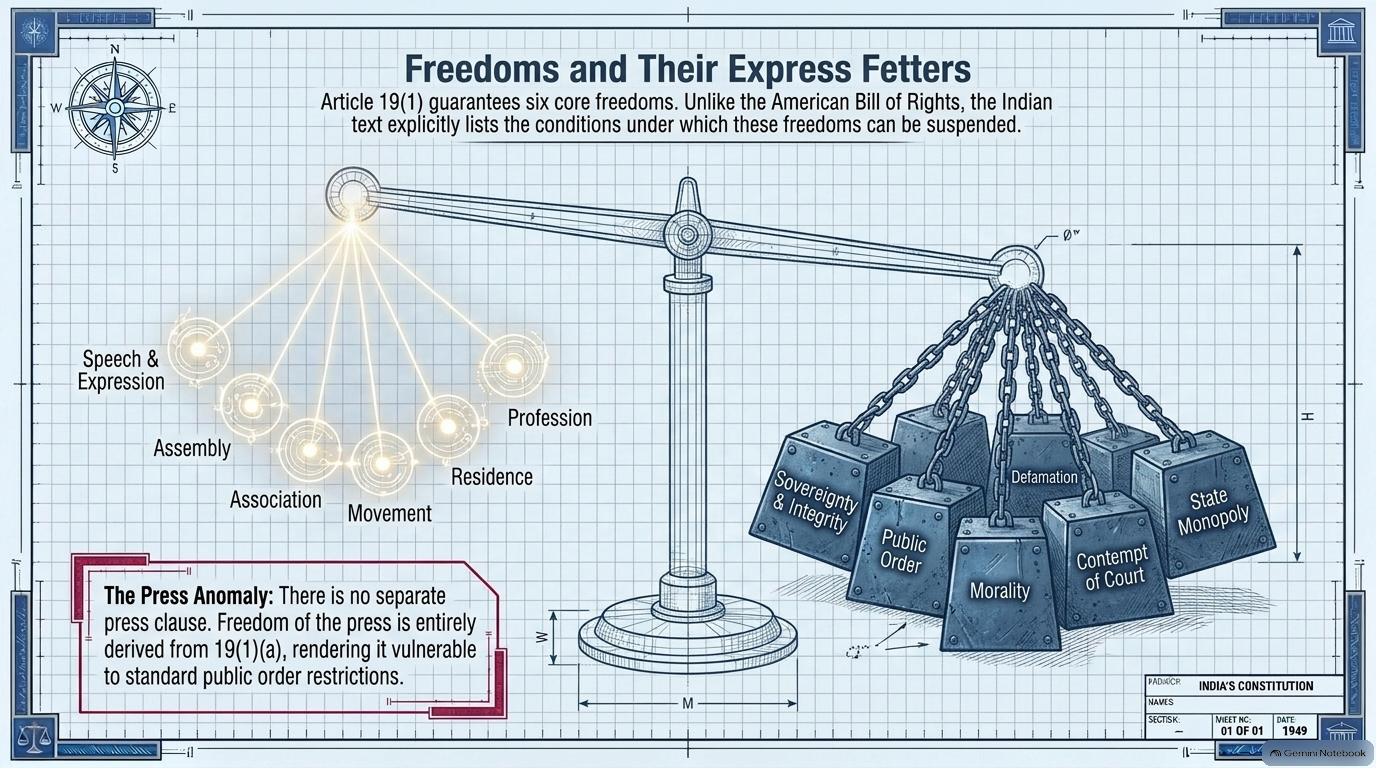
- Article 19 (Six Freedoms): Guarantees core civil liberties—such as freedom of speech, peaceful assembly, association, movement, residence, and profession[7]—while restricting them under clauses (2) through (6)[7]. These enumerated grounds include the sovereignty and integrity of India, security of the State, public order, decency or morality, friendly relations with foreign states, contempt of court, defamation, incitement to an offence, and protection of Scheduled Tribes [20, 45–47, 74, 144]. Restrictions must be enacted through valid legislation and cannot be based on unlisted grounds[12][13].
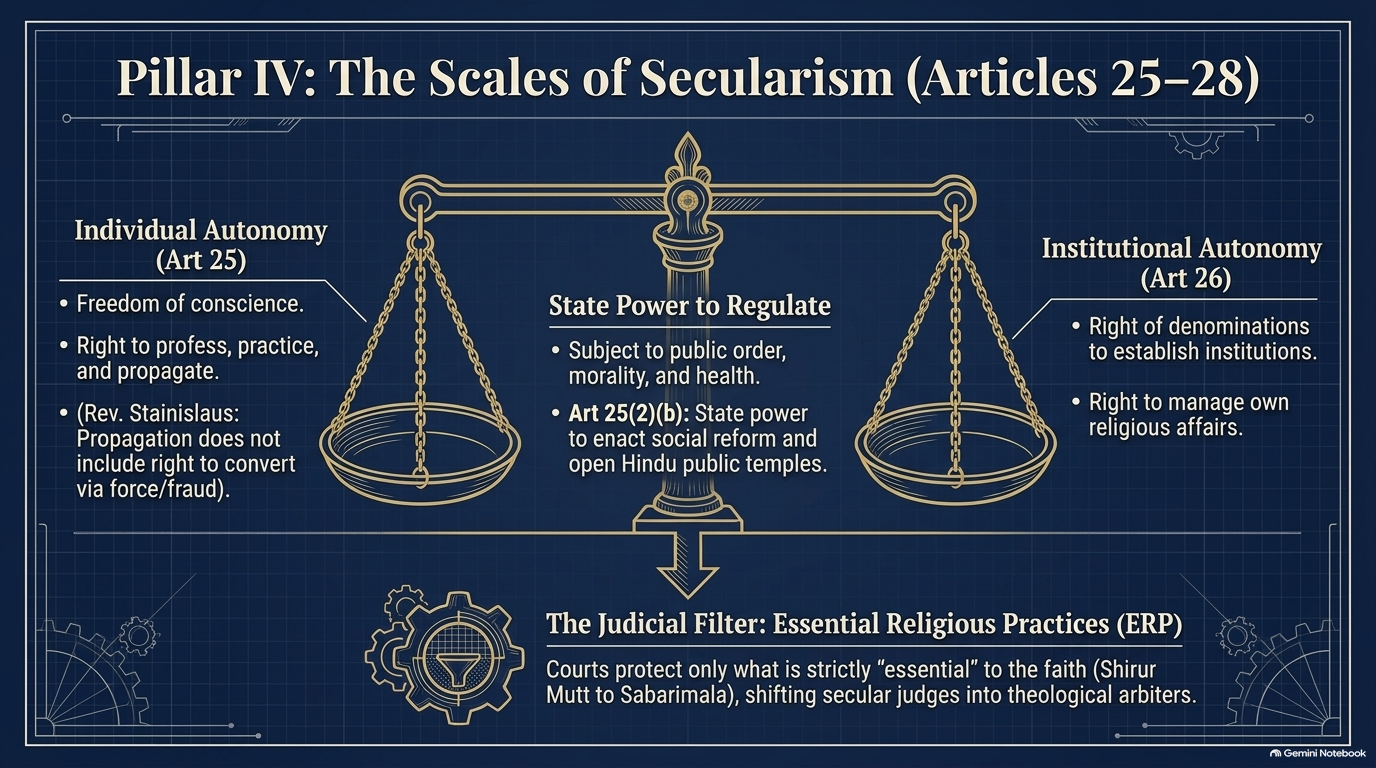
- Article 25 (Freedom of Religion): Guarantees freedom of conscience and the right to profess, practice, and propagate religion, but explicitly subjects these to public order, morality, and health[14].
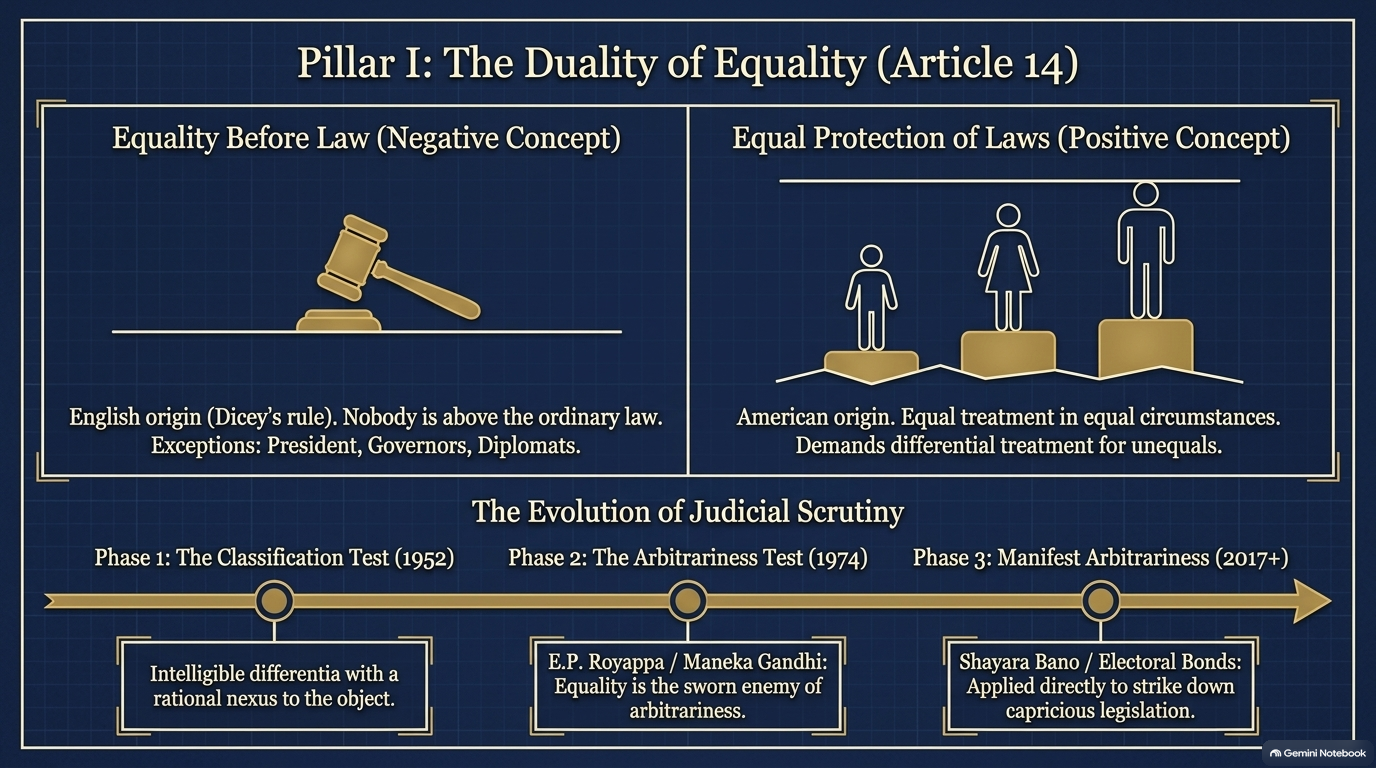
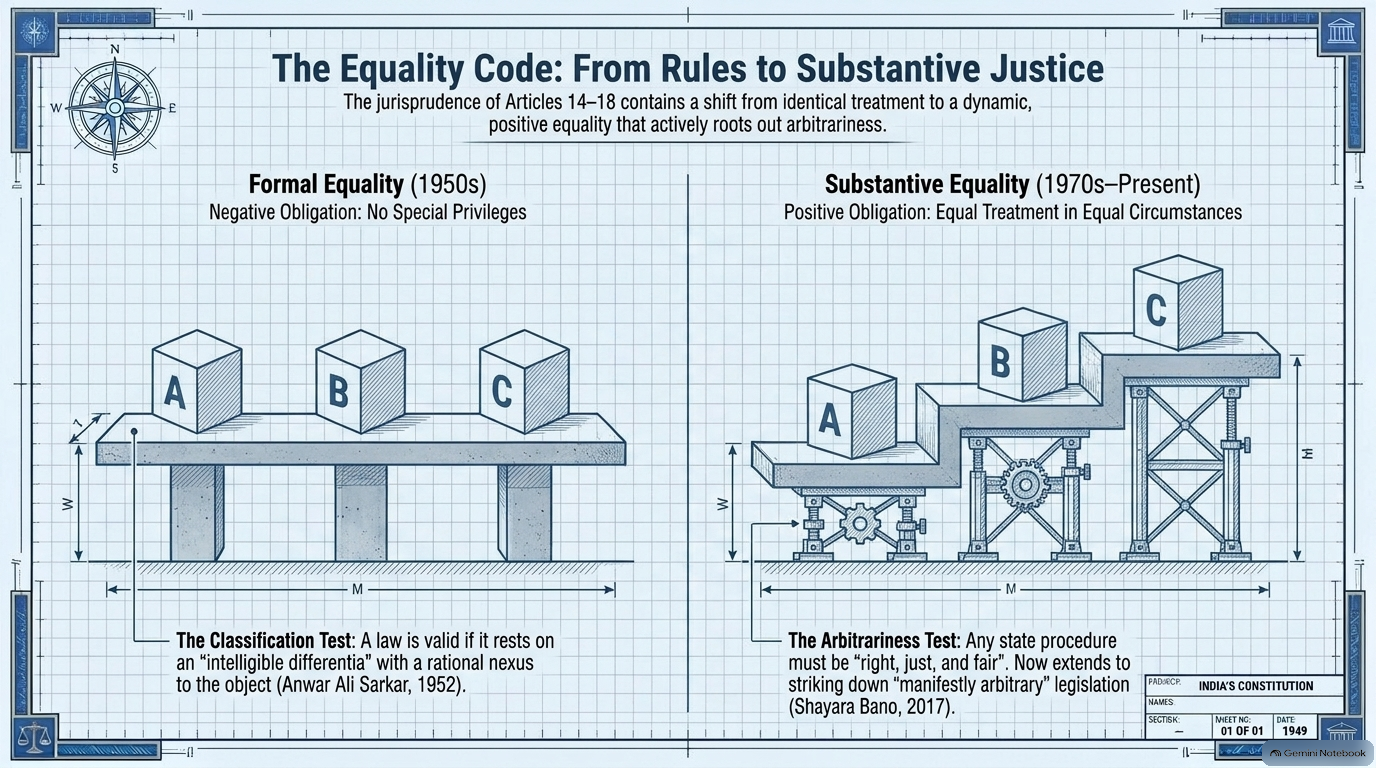
- Article 14 (Right to Equality): Prohibits arbitrary class legislation while permitting reasonable classification of individuals or groups if based on an intelligible differentia with a rational nexus to the law’s statutory objective[17][18].
2. Judicial Scrutiny and the Proportionality Test
The judiciary acts as the constitutional umpire to determine whether a state restriction is “reasonable” or amounts to executive/legislative overreach[1]:
- Judicial Review (Article 13): Empowers the courts to declare any law or executive action that violates or abridges Fundamental Rights as void[3].
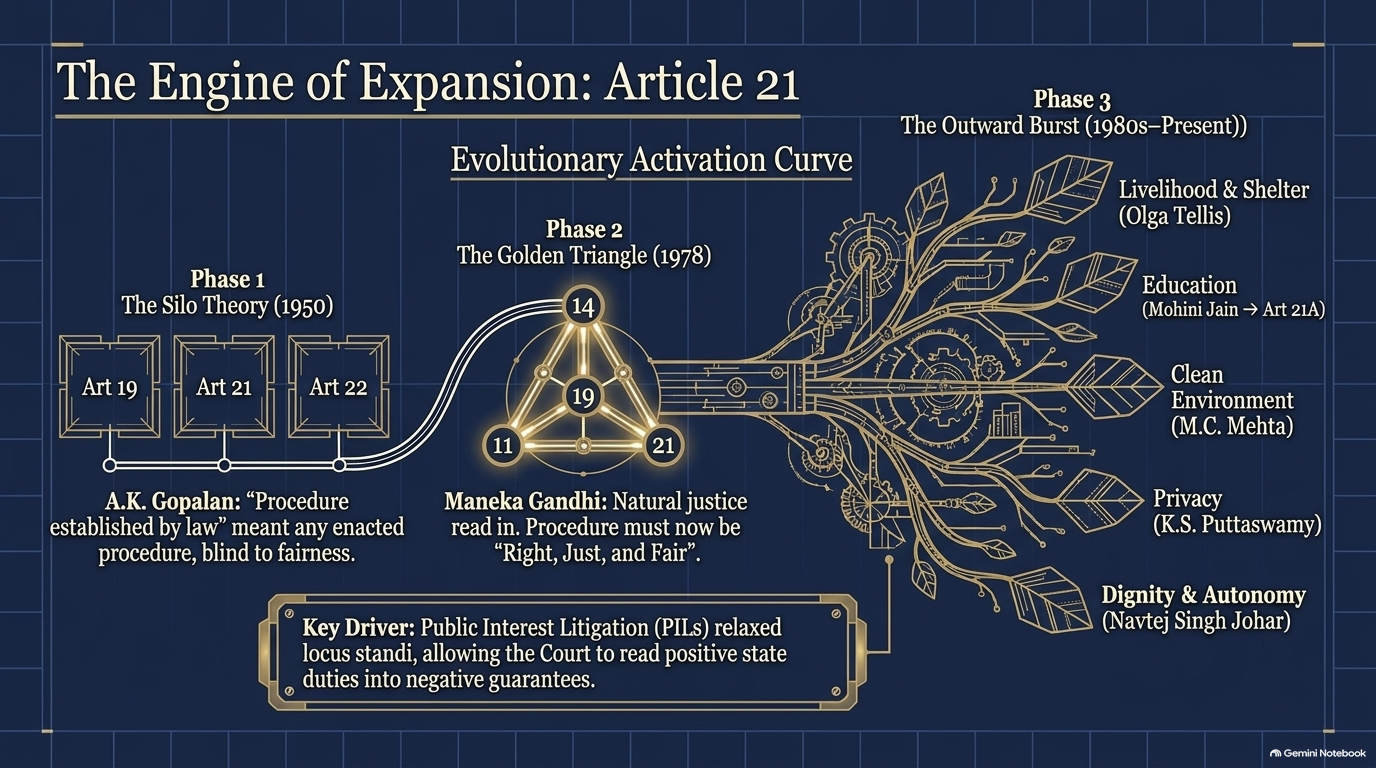
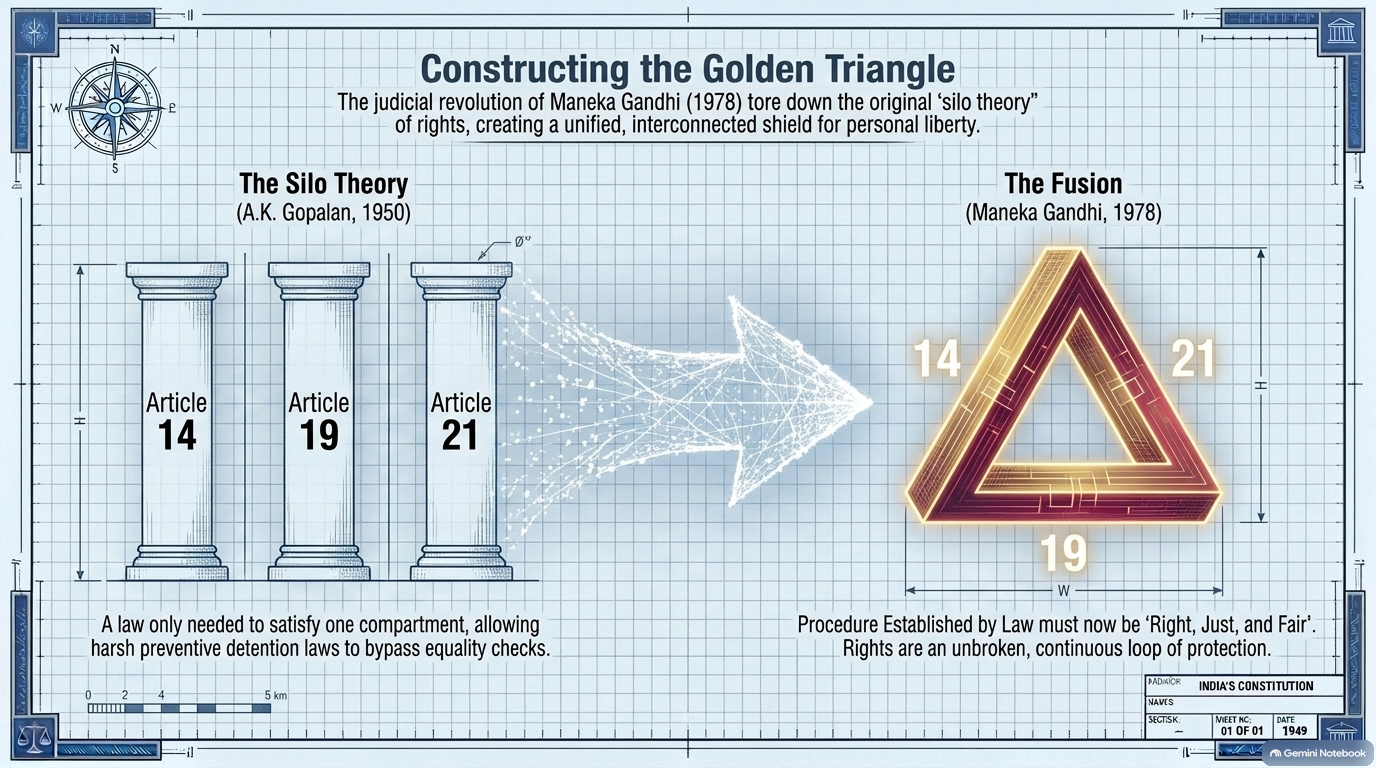
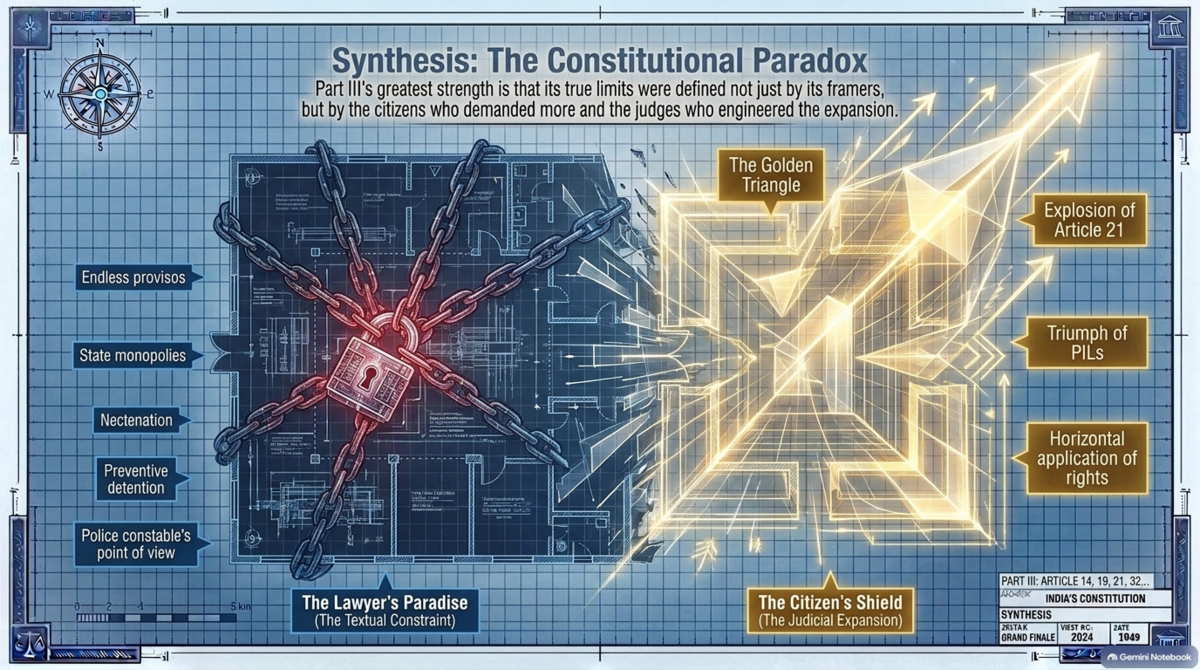
- The “Golden Triangle” Standard ( Maneka Gandhi , 1978): Established that Articles 14, 19, and 21 form an interconnected scheme[22]. Any law that deprives a person of personal liberty under Article 21 must specify a procedure that is just, fair, and reasonable rather than arbitrary or oppressive[22].
- Structured Proportionality Test ( Modern Dental College & Puttaswamy ): Courts evaluate the constitutionality of a restriction using a four-prong test: verifying a legitimate state goal, suitability of the law, necessity (employing the least invasive means), and proportional balancing between individual rights and social interests[12].
3. Non-Suspendable Rights & Emergency Limits
To prevent the complete erosion of individual liberty during times of national crisis, the Constitution sets firm boundaries on state emergency powers:
- Right to Constitutional Remedies (Article 32): Empowers citizens to directly approach the Supreme Court for writ enforcement (Habeas Corpus, Mandamus, Prohibition, Certiorari, Quo Warranto) if their rights are infringed[3].
- The Non-Suspendable Core (Articles 20 & 21): Under the 44th Constitutional Amendment Act (1978), protection in respect of conviction for offences (Article 20) and the protection of life and personal liberty (Article 21) can never be suspended, even during a National Emergency[1].
- Limits on Suspension of Article 19: The six freedoms guaranteed by Article 19 automatically suspend under Article 358 only when a National Emergency is declared on the grounds of war or external aggression, and not on the ground of armed rebellion
Landmark judicial decisions have defined and controlled state restrictions on Fundamental Rights by moving from a literal, isolated interpretation of law to a strict, substantive scrutiny of state action. Through key doctrines and tests, the Supreme Court has set clear boundaries on how and when the state can limit individual freedoms:
1. From Compartmentalization to the “Golden Triangle”
- The Silo View ( A.K. Gopalan , 1950): Initially, the Court viewed fundamental rights in separate, distinct compartments[1]. Under this narrow reading, any procedure enacted by the legislature satisfied Article 21, regardless of whether the procedure was fair or just[1].
- The Effect Test ( R.C. Cooper , 1970): The Court shifted focus from the legislative object of a law to its direct effect and operation on individual rights[1][5].
- The “Golden Triangle” ( Maneka Gandhi , 1978): Overruling Gopalan, the Court established that Articles 14, 19, and 21 form an interconnected scheme[1]. Any law restricting personal liberty under Article 21 must pass the tests of Article 14 (non-arbitrariness) and Article 19 (reasonable restrictions), requiring state procedures to be just, fair, and reasonable rather than arbitrary or oppressive[1].
2. The Non-Arbitrariness & Manifest Arbitrariness Standards
- Anti-Arbitrariness ( E.P. Royappa , 1974 & Ajay Hasia , 1981): The judiciary expanded Article 14 beyond formal classification, declaring that equality and arbitrariness are sworn enemies and that principles of natural justice are implicit in state action[6].
- Manifest Arbitrariness ( Shayara Bano , 2017): The Supreme Court ruled that a statutory provision can be struck down under Article 14 if it is manifestly arbitrary—meaning enacted capriciously, irrationally, or without an adequate determining principle[6].
3. The Structured Four-Prong Proportionality Test
In Modern Dental College (2016) and K.S. Puttaswamy (2017), the Supreme Court adopted a strict four-prong proportionality standard to evaluate state restrictions[10][11]:
- Legitimate State Goal: The restriction must serve a valid statutory or state objective[10].
- Suitability: There must be a rational connection between the restricting measure and the stated goal[10].
- Necessity: The state must adopt the least restrictive or least invasive alternative available to achieve its objective[10].
- Proportionality Stricto Sensu : The overall social benefit of achieving the goal must outweigh the severity of the infringement on individual liberty[10].
4. Exhaustive Grounds & Basic Structure Limits
- Exhaustive Grounds ( Kaushal Kishor , 2023): The Supreme Court reaffirmed that the grounds for restricting Article 19 freedoms listed under clauses (2) through (6) are exhaustive; the executive or legislature cannot create additional unlisted grounds[10].
- Basic Structure Barrier ( Kesavananda Bharati , 1973 & I.R. Coelho , 2007): Constitutional amendments and laws placed in the Ninth Schedule after April 24, 1973 remain subject to judicial review if they violate fundamental rights or alter the basic structure of the Constitution[14].
5. Vagueness, Overbreadth & Internet Rights
- Vagueness & Chilling Effect ( Shreya Singhal , 2015): Struck down Section 66A of the IT Act because vague terms (such as “grossly offensive”) led to overbroad restrictions that chilled legitimate free speech[19].
- Proportionality in Executive Orders ( Anuradha Bhasin , 2020): Ruled that administrative restrictions (such as internet shutdowns) cannot be imposed indefinitely and must strictly adhere to the tests of necessity and periodic review
The Supreme Court developed the “Golden Triangle” test by transitioning from a narrow, literal reading of fundamental rights to an interconnected, substantive interpretation of Articles 14, 19, and 21[1]. This evolution occurred across three major judicial phases:
1. The Compartmentalization Phase: A.K. Gopalan (1950)
- The “Silo” Theory: In A.K. Gopalan v. State of Madras, the Supreme Court initially held that fundamental rights operated in separate, mutually exclusive compartments[2].
- Strict Literal Interpretation: The Court ruled that “procedure established by law” under Article 21 meant any procedural law enacted by the legislature, regardless of whether that law was harsh, unfair, or inconsistent with Article 14 (equality) or Article 19 (freedoms)[2].
- The Dissent: Justice Fazl Ali dissented alone, arguing that fundamental rights are intrinsically interconnected and that principles of natural justice must be read into Article 21—a view that later became the constitutional standard[2].
2. The Shift to the “Effect Test”: R.C. Cooper (1970)
- In R.C. Cooper v. Union of India (the Bank Nationalisation case), the Supreme Court broke away from the rigid compartmentalization view[2][6].
- The Court established the direct operation and effect test, ruling that a law must be judged by its direct impact on fundamental rights rather than merely the government’s stated object or form[2][6]. This laid the foundation for evaluating state action across overlapping constitutional guarantees[2].
3. The Creation of the “Golden Triangle”: Maneka Gandhi (1978)
- Interconnected Scheme: In Maneka Gandhi v. Union of India (concerning the impounding of a passport without a prior hearing), a seven-judge bench formally established that **Articles 14, 19, and 21 form an interconnected, overlapping scheme—the “Golden Triangle”**[1].
- OverrulingGopalan: The Court overruled Gopalan, holding that a law depriving a person of personal liberty under Article 21 cannot be evaluated in isolation[1]. To be constitutionally valid, the state action must simultaneously pass the tests of:
- Article 14: The procedure must be non-arbitrary and adhere to natural justice[1].
- Article 19: The restriction must be reasonable and fall within an enumerated restriction ground under clauses (2) through (6)[1].
- Article 21: The procedure must be just, fair, and reasonable rather than arbitrary, fanciful, or oppressive[1].
- Judicial Import of “Due Process”: By requiring state procedures to be “just, fair, and reasonable,” the Supreme Court effectively integrated the American concept of substantive due process into Indian jurisprudence through judicial interpretation[4].
4. Further Entrenchment (Puttaswamy, 2017)
- In K.S. Puttaswamy v. Union of India, a nine-judge bench unanimously reaffirmed the Golden Triangle standard in recognizing the right to privacy[7][14].
- The Court clarified that any state infringement on life or personal liberty must meet a strict tripartite test: legality (existence of a law), a legitimate state aim, and proportionality (ensuring the restriction is necessary and the least invasive option)
Under Article 21 of the Indian Constitution, the protection of life and personal liberty has been judicially expanded to include the Right to Privacy as a guaranteed fundamental right[1].
1. Landmark Constitutional Recognition ( Puttaswamy , 2017)
In Justice K.S. Puttaswamy v. Union of India (2017), a nine-judge bench of the Supreme Court unanimously held that privacy is intrinsic to life and personal liberty guaranteed under Article 21[2]. This landmark ruling overruled earlier decisions (M.P. Sharma and Kharak Singh) that had refused to recognize privacy as a distinct fundamental right[2][4].
2. The Three Core Dimensions of Privacy
The Supreme Court established that Article 21 protects privacy across three primary facets[2]:
- Bodily and Spatial Privacy: Protects physical integrity, personal space, and freedom from state intrusion[2]. For instance, in Selvi v. State of Karnataka (2010), the Court ruled that subjecting individuals to narco-analysis, polygraph tests, or brain mapping without consent violates both the protection against self-incrimination and the right to mental privacy under Article 21[5][6].
- Informational Privacy: Guarantees informational self-determination, ensuring that individuals retain control over their personal data, digital footprints, and communications[1][2]. This principle established constitutional limits on mass data collection (such as Aadhaar restrictions) and influenced statutory frameworks like the Digital Personal Data Protection Act, 2023[2].
- Decisional Autonomy: Safeguards the freedom to make intimate personal decisions without state interference[2]. This includes autonomy over:
- Marriage and Relationships: Right to choose one’s life partner (Shafin Jahan, 2018)[3].
- Sexual Orientation & Identity: Decriminalization of consensual adult same-sex relationships (Navtej Singh Johar, 2018)[2].
- Reproductive & Lifestyle Choices: Decisions concerning food, health, and family planning[2].
3. State Limitations & The Tripartite Test
Like most fundamental rights, the right to privacy under Article 21 is qualified rather than absolute[2]. To lawfully infringe upon an individual’s privacy, the state must pass a strict tripartite test[2]:
- Legality: The restriction must be backed by a clear and valid law passed by the legislature[2].
- Legitimate State Aim: The law must serve a valid statutory goal (e.g., national security, prevention of crime, or social welfare delivery)[2].
- Proportionality: The state action must be suitable, necessary (employing the least invasive means available), and proportionate in balancing individual liberty against public interest[2]
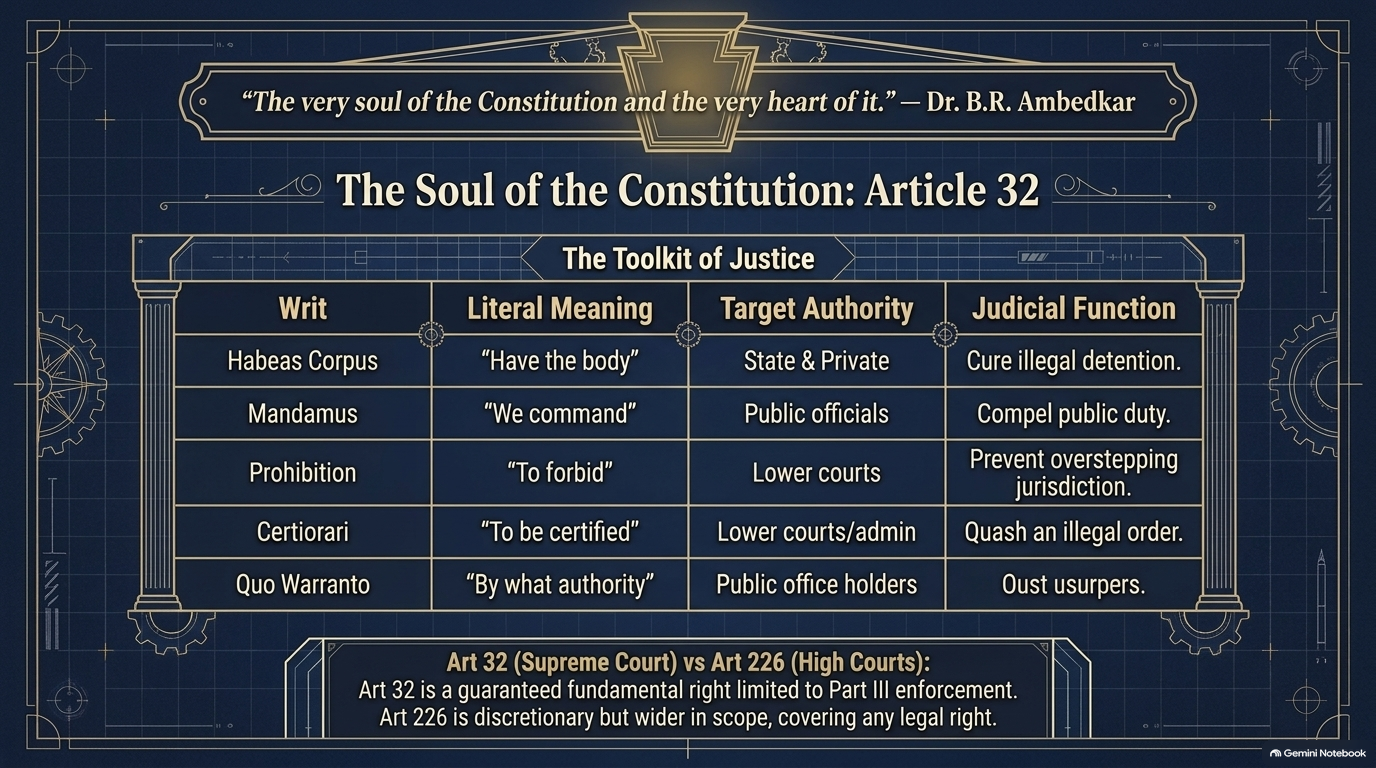
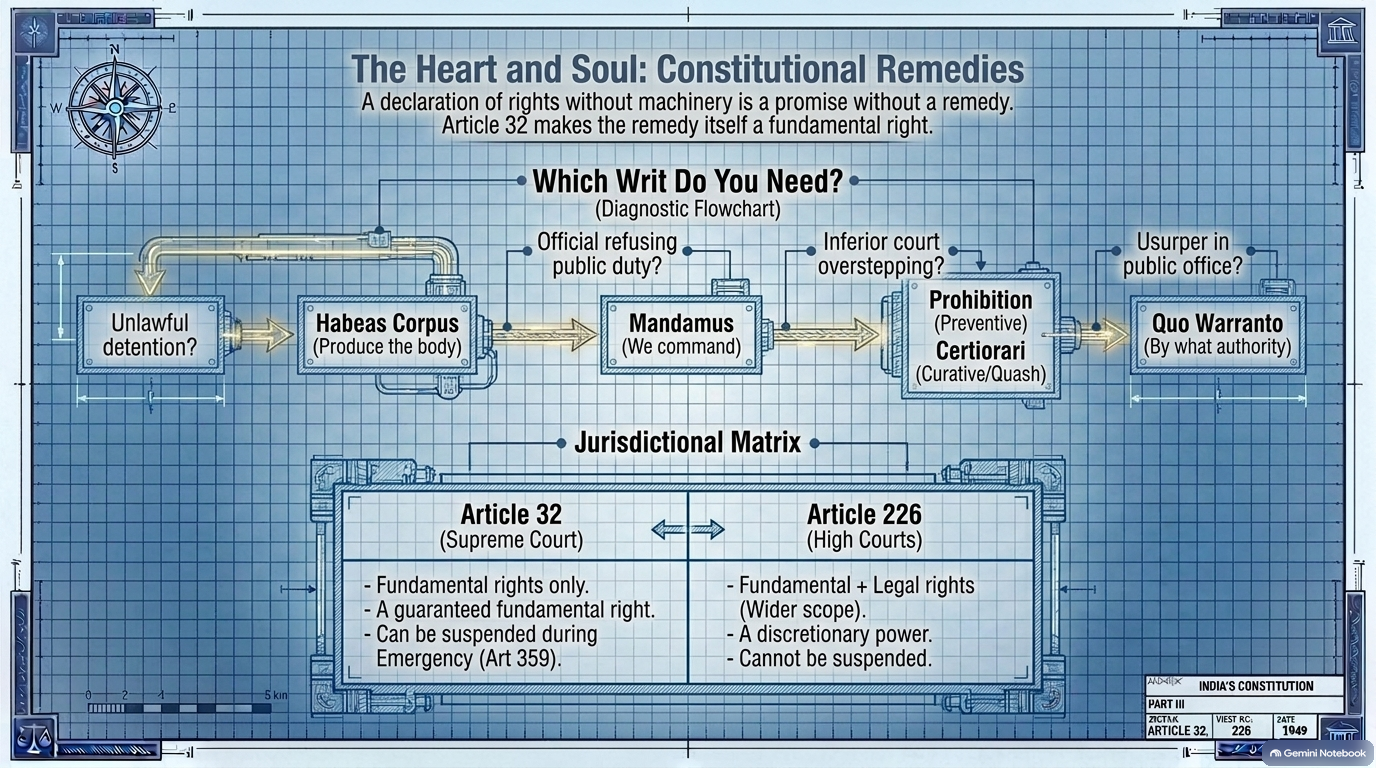
Dr. B.R. Ambedkar famously declared Article 32 to be *”the most important article without which this Constitution would be a nullity… the very soul of the Constitution and the very heart of it”*[1].
Article 32 earns this status because a declaration of fundamental rights without an effective enforcement mechanism is merely a theoretical promise[1][5]. It transforms abstract constitutional guarantees into justiciable, legally enforceable entitlements through several key features[1][6]:
1. The Remedy itself is a Fundamental Right (Article 32(1))
Uniquely under the Indian Constitution, the right to move the Supreme Court for the enforcement of Part III liberties is itself a guaranteed Fundamental Right[1]. Unlike ordinary legal remedies created by statutes, citizens do not depend on legislative discretion to seek constitutional protection[10][11].
2. Direct Access to the Supreme Court
An aggrieved individual does not need to proceed through lengthy lower court appeals before reaching the highest court[12]. Article 32 establishes the Supreme Court as the protector and guarantor of Fundamental Rights, conferring direct original jurisdiction to hear petitions against executive or legislative overreach[7].
3. The Five Prerogative Writs (Article 32(2))
Article 32 empowers the Supreme Court to issue directions, orders, or five specific prerogative writs tailored to different types of rights violations[7]:
- Habeas Corpus (“You may have the body”): Secures the immediate release of a person unlawfully detained by the State or a private individual[17].
- Mandamus (“We command”): Forces a public authority or official to perform a mandatory statutory duty they have failed or refused to execute[17].
- Prohibition: A preventive writ issued to lower courts or tribunals to halt proceedings that exceed their lawful jurisdiction[17].
- Certiorari (“To be certified”): A curative writ issued to quash an order already passed by an inferior court, tribunal, or administrative authority without jurisdiction or in violation of natural justice [35, 90–91, 120, 168–169].
- Quo Warranto (“By what authority”): Challenges the legal entitlement of a person claiming or holding a substantive public office to prevent unlawful usurpation[15].
4. Protected under the Basic Structure Doctrine
In L. Chandra Kumar v. Union of India (1997), the Supreme Court ruled that the writ jurisdiction under Article 32 constitutes an integral part of the basic structure of the Constitution[5]. As a result, Parliament cannot abridge, dilute, or remove Article 32 even through a constitutional amendment under Article 368
While both Article 32 and Article 226 empower courts to issue writs for enforcing rights, they differ fundamentally in their constitutional status, scope of jurisdiction, and applicability during emergencies[1]:
1. Fundamental Right vs. Constitutional Right
- Article 32 (Supreme Court): The right to move the Supreme Court for the enforcement of Part III freedoms is itself a guaranteed Fundamental Right[2]. If a violation of a Fundamental Right is established, the Supreme Court cannot refuse to entertain the petition or grant a remedy[2].
- Article 226 (High Courts): It confers a constitutional power/right, but it is not a Fundamental Right[2]. The High Court’s writ jurisdiction is discretionary, meaning a High Court may refuse relief if alternative effective legal remedies exist or if there is unexcused delay (laches)[2][3].
2. Scope of Subject Matter (Jurisdiction)
- Article 32: Narrower in subject matter; it lies strictly for the enforcement of Fundamental Rights[2]. An ordinary legal, statutory, or contractual claim cannot be directly challenged under Article 32[2][9].
- Article 226: Significantly broader in scope; it allows High Courts to issue writs for the enforcement of Fundamental Rights AND “any other purpose” (i.e., ordinary legal, constitutional, or statutory rights)[1].
3. Territorial Extent
- Article 32: The Supreme Court exercises pan-India jurisdiction, issuing directions or writs applicable across the entire territory of India[2][3].
- Article 226: High Courts exercise jurisdiction primarily within their respective state/territorial limits, or where the cause of action wholly or partially arises[2][3].
4. Emergency Suspension
- Article 32: Can be suspended by a Presidential order under Article 359 during a National Emergency—though following the 44th Constitutional Amendment Act (1978), enforcement of Articles 20 and 21 can never be suspended[2].
- Article 226: Is not automatically suspended during a National Emergency, particularly concerning the enforcement of non-fundamental legal rights[2].
5. Basic Structure & Judicial Practice
- Basic Structure Protection: The Supreme Court affirmed in L. Chandra Kumar v. Union of India (1997) that the writ jurisdiction of both the Supreme Court under Article 32 and the High Courts under Article 226 forms an integral part of the basic structure of the Constitution and cannot be abrogated by constitutional amendments[2].
- Relegation Practice: Because Article 226 provides a broader and locally accessible remedy, the Supreme Court often encourages petitioners to approach the High Court under Article 226 first before seeking direct relief under Article 32
While Article 14 guarantees equality before the law and equal protection of the laws to all persons within India[1][2], the rule of equality is not absolute[3]. The Constitution, judicial interpretations, and international law recognize several specific exceptions where differential treatment or legal immunity is permitted:
1. Constitutional Immunities for Executive Heads (Article 361)
The President of India and State Governors are granted specific personal immunities to ensure the unhindered performance of their official duties[1][4]:
- No Judicial Answerability: They are not answerable to any court for the exercise and performance of the powers and duties of their office[1].
- Immunity from Criminal Proceedings: No criminal proceedings whatsoever can be instituted or continued against them in any court during their term of office[1].
- Immunity from Arrest/Imprisonment: No process for their arrest or imprisonment can be issued by any court during their tenure[4].
- Notice for Civil Proceedings: Civil proceedings regarding personal acts can only be instituted after providing at least two months’ written notice[1].
2. Legislative Privileges (Articles 105, 194 & 361A)
To protect democratic debate and parliamentary independence, lawmakers enjoy specific legal exemptions:
- Members of Parliament (Article 105): No MP is liable to any court proceedings in respect of anything said or any vote given in Parliament or any of its committees[1].
- Members of State Legislatures (Article 194): State legislators enjoy identical immunity regarding statements or votes within the State Legislature or its committees[1].
- Publication of Legislative Reports (Article 361A): No person is liable to civil or criminal proceedings for publishing a substantially true report of Parliamentary or State Legislative proceedings, provided it is done without malice[1][7].
3. Primacy of Directive Principles (Article 31C)
- Article 31C provides that any law enacted by the State to implement the socialistic Directive Principles specified under Article 39(b) (distribution of material resources for the common good) or Article 39(c) (prevention of concentration of wealth) cannot be declared void on the ground that it violates Article 14[6].
- As the Supreme Court observed: *”Where Article 31C comes in, Article 14 goes out”*[6].
4. Savings of Estate Acquisition & Ninth Schedule Laws (Articles 31A & 31B)
- Article 31A: Protects five specific categories of laws—such as the state acquisition of estates, taking over management of properties, or modification of mining leases—from being invalidated under Article 14 or Article 19 [8, 68–69, 203].
- Article 31B: Validates acts and regulations specified in the Ninth Schedule from challenges based on Fundamental Rights violations[8] (though post-April 24, 1973 additions remain open to judicial review if they violate the basic structure[8]).
5. Diplomatic and Sovereign Immunities
Under international law and statutory provisions:
- Foreign Sovereigns and Diplomats: Foreign rulers, ambassadors, and diplomatic envoys posted in India enjoy immunity from civil and criminal jurisdiction in Indian courts [4, 90, 243–244].
- United Nations Organizations: The United Nations (UN) and its agencies enjoy diplomatic immunity under the UN (Privileges & Immunities) Act[5][12].
6. Doctrine of Permissible Reasonable Classification
While not an exemption from the Constitution itself, Article 14 allows for reasonable classification of people, objects, or transactions, prohibiting only arbitrary class legislation[2]. To be valid, any state classification must pass a two-fold test[5]:
- Intelligible Differentia: The classification must rest on clear, real distinctions that differentiate grouped persons/things from those left out[5][13].
- Rational Nexus: The differentia must have a direct, logical connection to the specific statutory objective of the law[5]
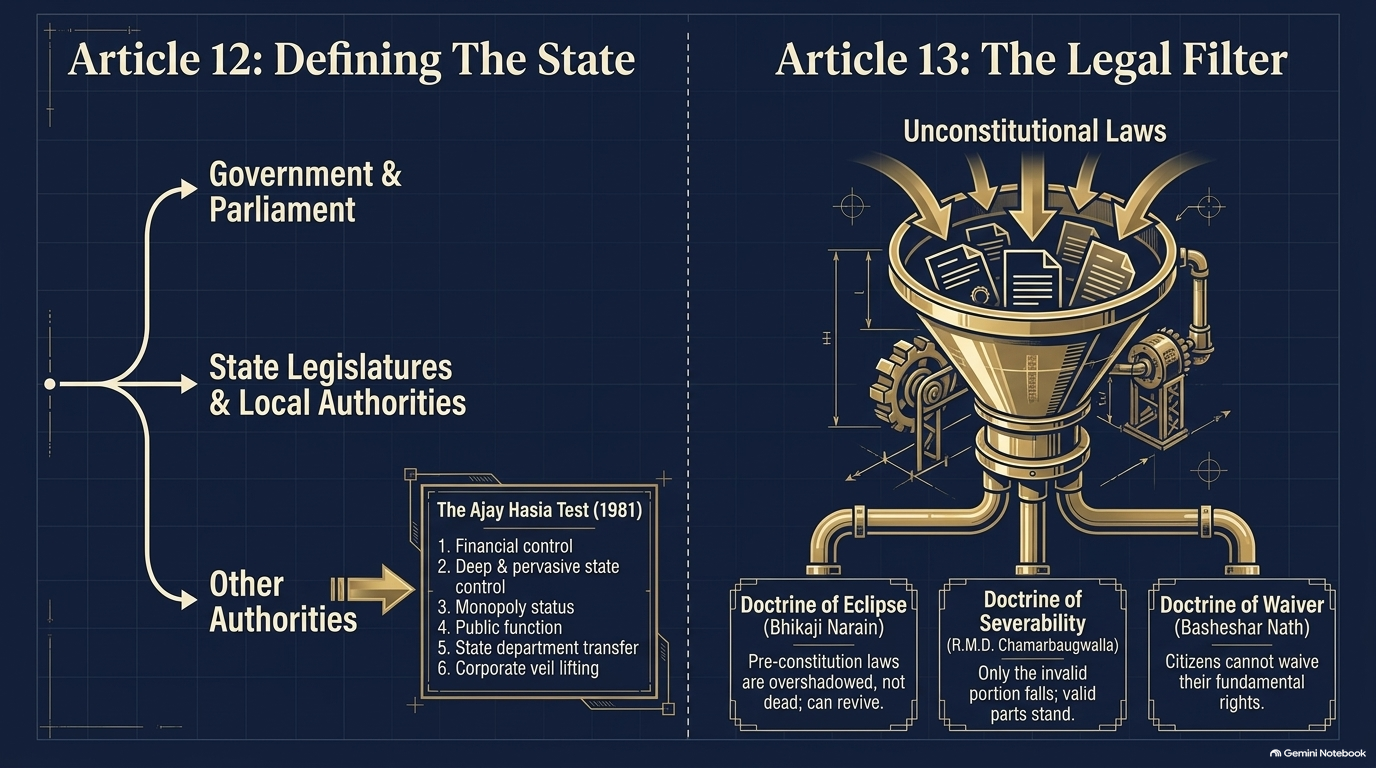
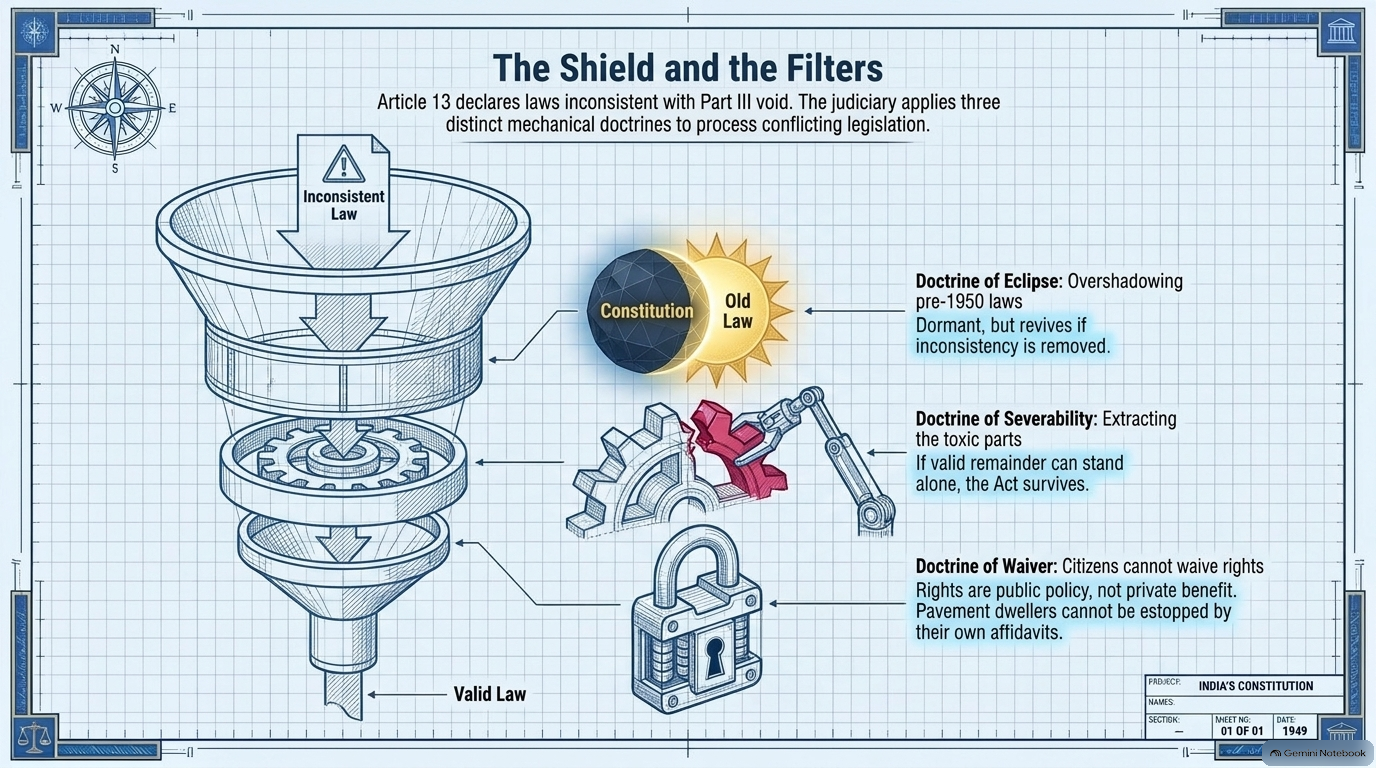
The Doctrine of Eclipse is a constitutional principle derived from Article 13(1) that governs laws enacted prior to the commencement of the Constitution (January 26, 1950) that conflict with Fundamental Rights[1].
1. How the Doctrine Works
- Overshadowed, Not Dead: When a pre-constitutional law violates a Fundamental Right under Part III, Article 13(1) does not wipe the law out of existence completely[1][3]. Instead, the law remains valid but stays dormant and unenforceable—it is “eclipsed” or overshadowed by the Fundamental Right[1].
- Automatic Revival: If the relevant Fundamental Right is subsequently amended or modified by Parliament in a way that removes the inconsistency, the shadow is lifted[1]. The law automatically revives and becomes enforceable again without the legislature needing to pass a new statute[1].
2. Pre-Constitutional vs. Post-Constitutional Laws
- Pre-Constitutional Laws (Article 13(1)): The doctrine primarily applies here because these statutes were validly enacted before the Constitution came into force[1].
- Post-Constitutional Laws (Article 13(2)): A law enacted after January 26, 1950, that contravenes a Fundamental Right is considered void ab initio (still-born from inception)[1]. Therefore, the doctrine of eclipse generally does not apply to post-constitutional laws (except in limited circumstances regarding non-citizens who cannot claim certain citizen-only rights under Article 19)[1].
3. Landmark Judgment: Bhikaji Narain Dhakras (1955)
The Supreme Court established this doctrine in **Bhikaji Narain Dhakras v. State of Madhya Pradesh (1955)**[1]:
- A pre-constitutional law authorized the state government to create a motor transport monopoly, which violated the freedom of trade under Article 19(1)(g)[1].
- When the First Constitutional Amendment Act (1951) amended Article 19(6) to allow the state to create commercial monopolies, the constitutional conflict disappeared[1].
- The Court ruled that the motor transport law, which had been eclipsed, automatically sprang back to life once the constitutional shadow was removed
A Comprehensive Study Guide to Fundamental Rights in the Indian Constitution
A Comprehensive Study Guide to Fundamental Rights in the Indian Constitution
This study guide provides a detailed review of the Fundamental Rights enshrined in Part III (Articles 12-35) of the Indian Constitution. It synthesizes the historical origins, legal doctrines, specific articles, and landmark judicial interpretations that define the relationship between the Indian State and its citizens.
Part I: Short-Answer Quiz
Instructions: Answer the following questions in two to three sentences based on the provided text.
- What is the significance of Part III of the Constitution being referred to as the “Magna Carta of India”?
- How does Article 13 ensure the supremacy of Fundamental Rights over ordinary legislation?
- Define the “State” as interpreted under Article 12 and explain the significance of “other authorities.”
- What are the two primary tests used by the judiciary to determine the validity of a law under Article 14?
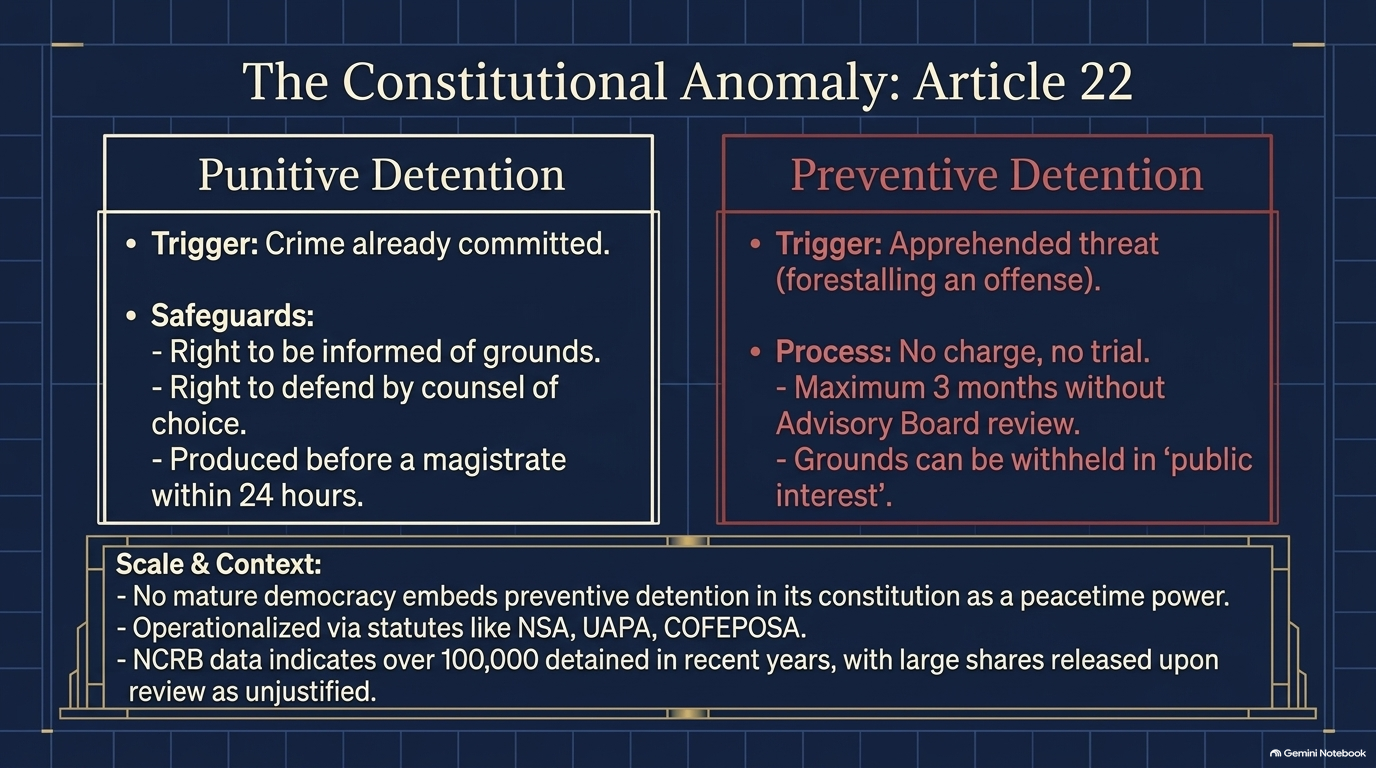
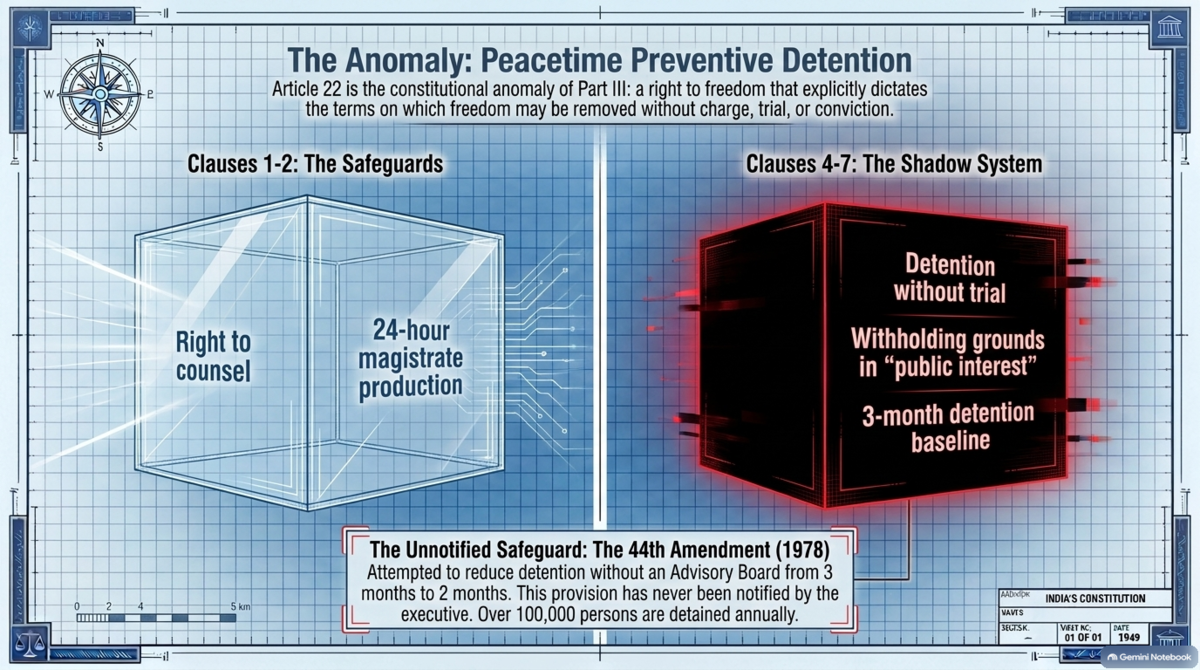
- Explain the difference between punitive and preventive detention as outlined in Article 22.
- How did the 86th Constitutional Amendment Act of 2002 change the status of education in India?
- What is the “Essential Religious Practices” doctrine used by Indian courts?
- Describe the “Doctrine of Severability” as applied under Article 13.
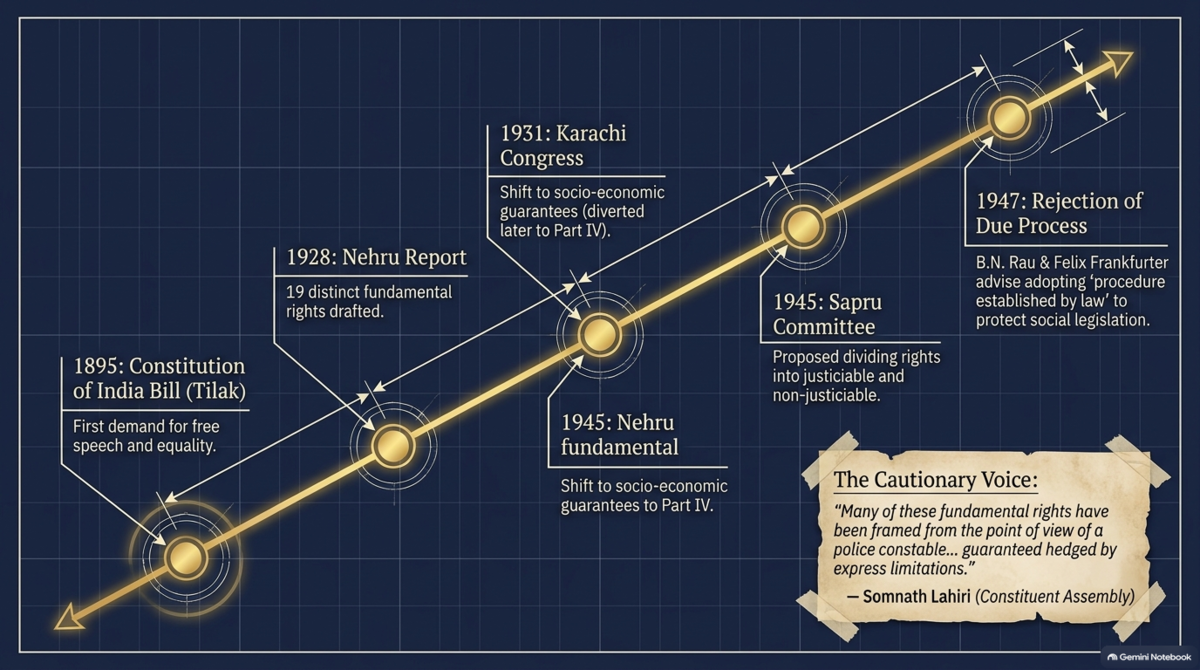
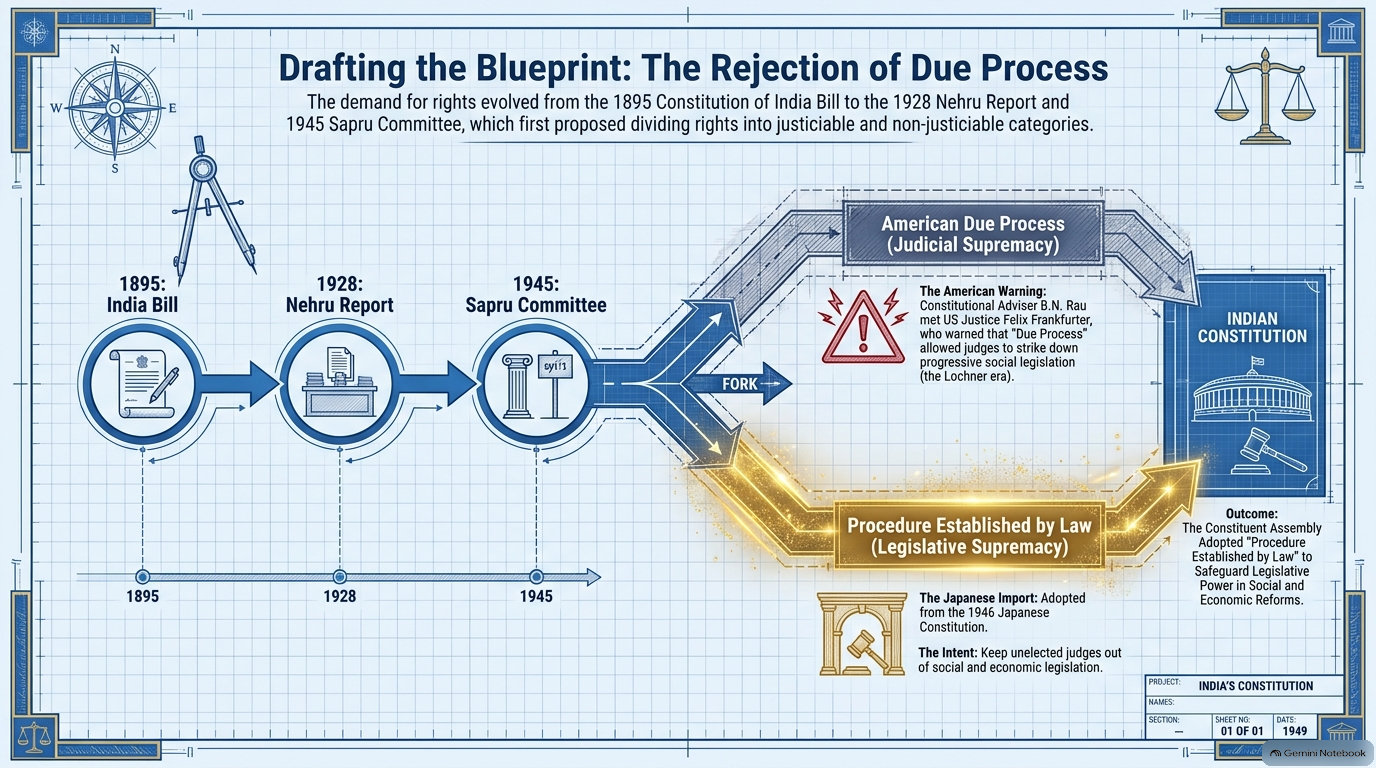
- Why did the framers of the Constitution choose “procedure established by law” over the American “due process of law”?
- What is the unique status of Article 32 compared to other Fundamental Rights?
Part II: Answer Key
- Magna Carta Significance: It refers to the Charter of Rights issued by King John of England in 1215, which was the first written document regarding the rights of citizens. By describing Part III this way, the Constitution emphasizes that these rights are the foundational guarantees of liberty that the State cannot arbitrarily revoke.
- Article 13 Supremacy: Article 13 declares that any law inconsistent with or in derogation of Fundamental Rights is void. It grants the Supreme Court and High Courts the power of judicial review to strike down pre-constitutional or post-constitutional laws that violate these rights.
- Article 12 and State: “State” includes the Government and Parliament of India, state governments/legislatures, and all local or “other authorities.” The term “other authorities” has been judicially expanded to include statutory corporations and agencies (like ONGC or LIC) that perform public functions or are under deep government control.
- Article 14 Tests: The first is the “classification test,” which requires an intelligible differentia with a rational nexus to the law’s object. The second is the “arbitrariness test” (from the E.P. Royappa case), which holds that equality and arbitrariness are enemies, requiring all State action to be fair and just.
- Detention Types: Punitive detention is the punishment of a person after a trial and conviction for an offence they have committed. Preventive detention is the detention of a person without trial, intended to forestall a future apprehended offence rather than punish a past one.
- 86th Amendment: This amendment inserted Article 21A into the Constitution, making free and compulsory elementary education a Fundamental Right for children aged six to fourteen. It shifted this provision from the non-justiciable Directive Principles (Article 45) to the justiciable Fundamental Rights.
- Essential Religious Practices: Developed in the Shirur Mutt case, this doctrine holds that Article 25 protects only those practices that are “essential” to a religion. It requires courts to determine, often through religious texts, which rituals or observances are foundational to the faith versus those that are superstitious accretions.
- Doctrine of Severability: This doctrine provides that if only a portion of a law is inconsistent with Fundamental Rights, only that specific portion is declared void, rather than the entire act. This is applicable as long as the valid part can stand alone and the legislative intention remains intact.
- Procedure Established by Law: The Assembly rejected “due process” to prevent judges from striking down social legislation based on their own policy preferences, as seen in the American Lochner era. However, since the Maneka Gandhi case, the Supreme Court has interpreted “procedure established by law” to mean a procedure that is right, just, fair, and non-arbitrary.
- Article 32 Status: Article 32 provides the right to constitutional remedies, which is itself a Fundamental Right. Dr. B.R. Ambedkar described it as the “soul” of the Constitution because, without a guaranteed judicial remedy for enforcement, all other rights would be meaningless.
Part III: Essay Format Questions
Instructions: Use the provided source context to develop comprehensive arguments for the following prompts. (Answers not provided).
- The Evolution of Article 21: Trace the transformation of the “Right to Life” from the restrictive “silo theory” in A.K. Gopalan to the expansive “Golden Triangle” interpretation in Maneka Gandhi and its current status as a source of numerous unenumerated rights.
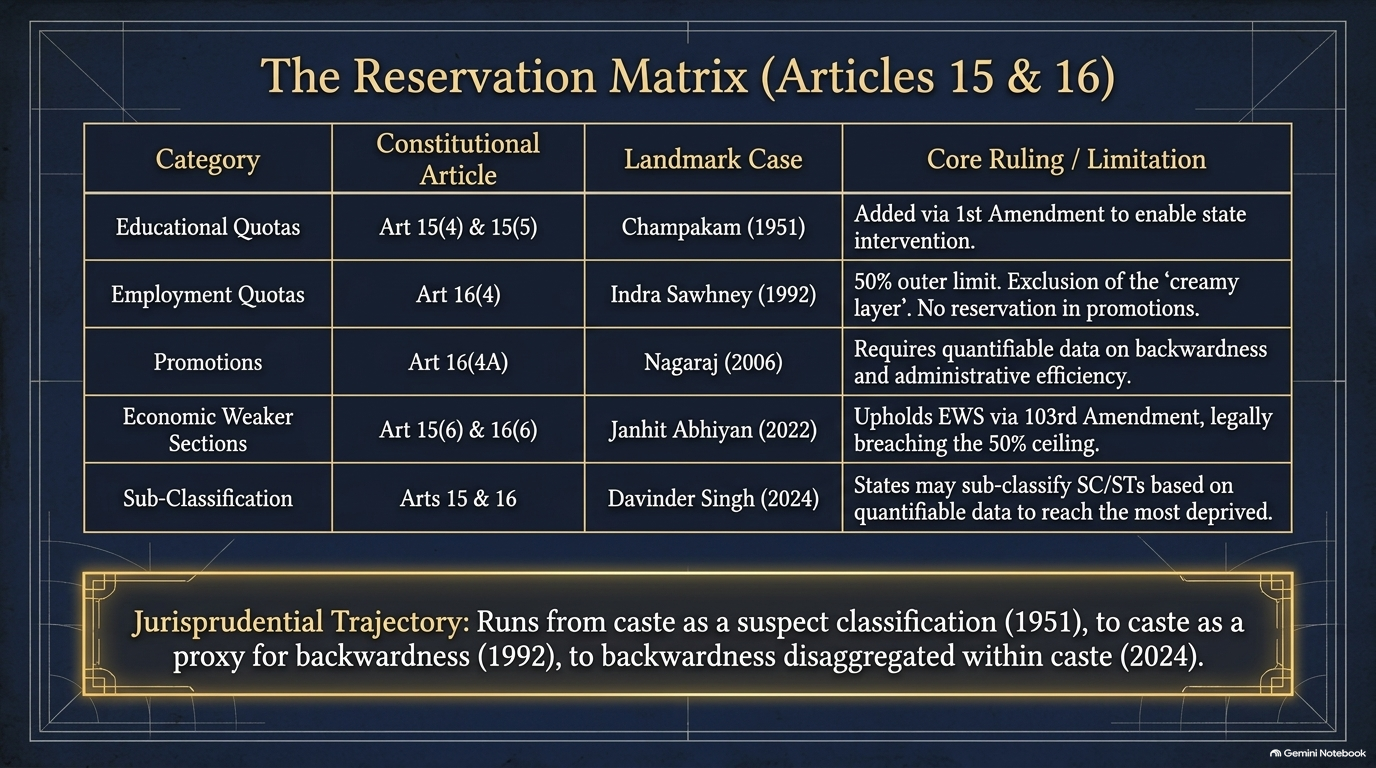
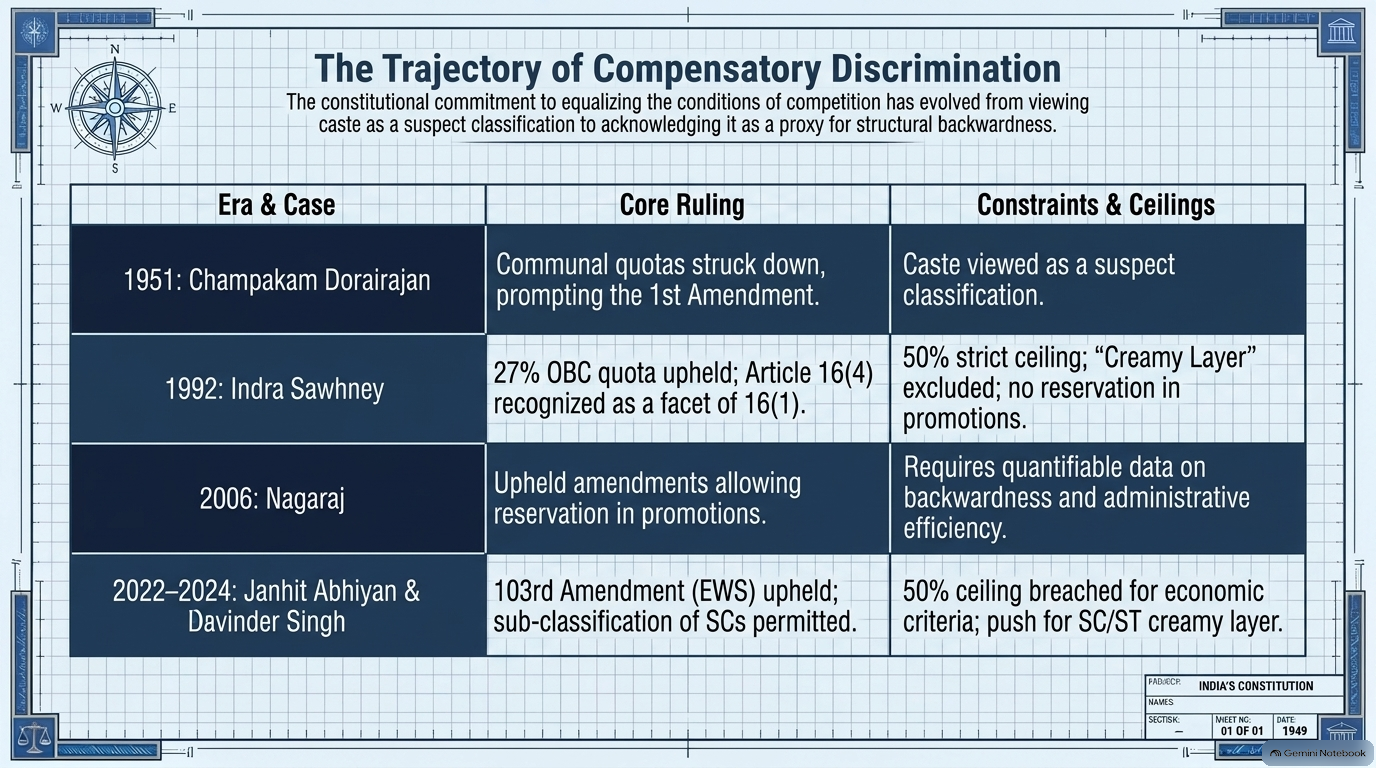
- The Jurisprudence of Reservation: Analyze the tension between formal and substantive equality in Articles 15 and 16. Discuss how the judiciary has balanced the need for compensatory discrimination with limits like the 50% ceiling and the “creamy layer” doctrine.
- Religious Freedom vs. Social Reform: Evaluate the State’s power to interfere in religious matters under Articles 25 and 26. Discuss the challenges posed by the “Essential Religious Practices” doctrine and the move toward “constitutional morality” in cases like Sabarimala.
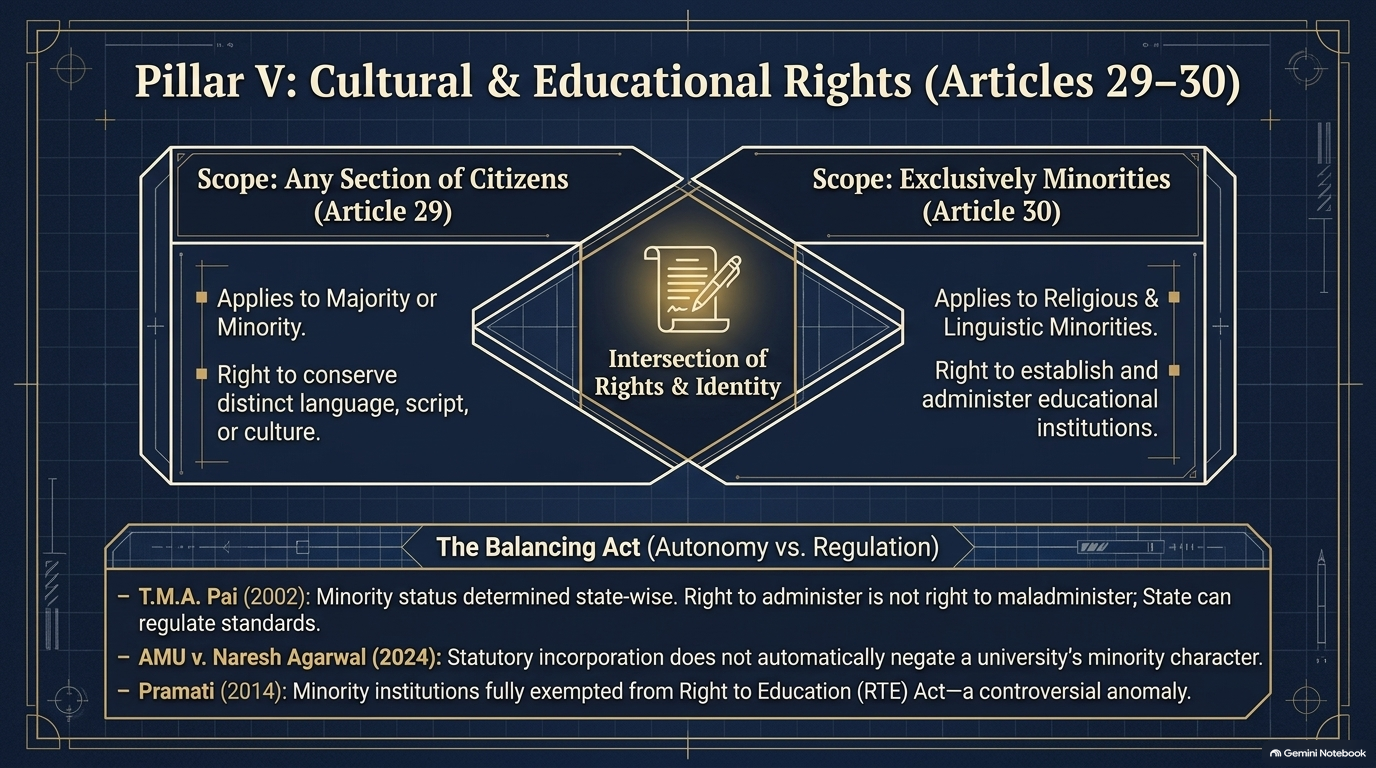
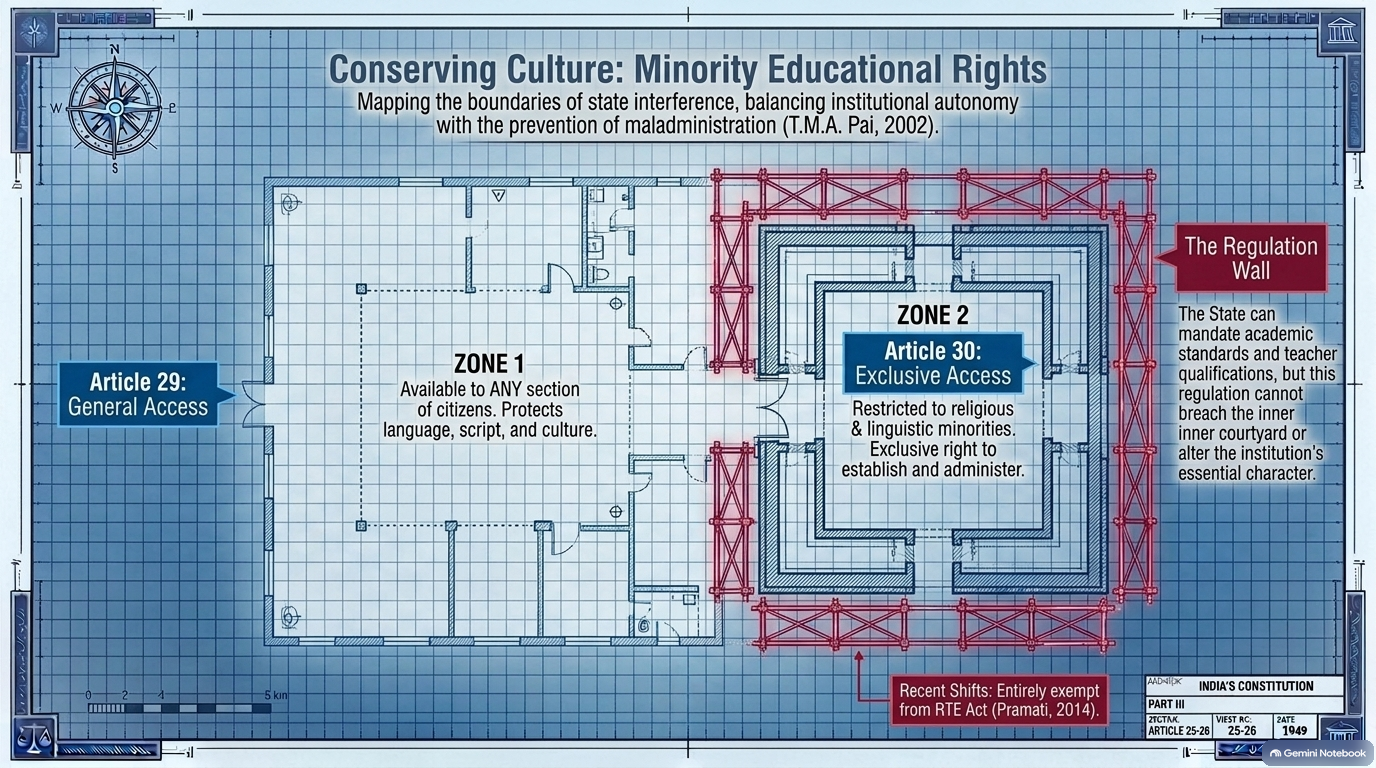
- Minority Rights and Educational Autonomy: Examine the scope of Article 30 and the rights of religious and linguistic minorities to administer educational institutions. Discuss the extent to which the State can regulate these institutions without abrogating their minority character.
- The Constitutional Anomaly of Preventive Detention: Critically discuss why the framers included preventive detention within the Fundamental Rights chapter. Evaluate the safeguards provided under Article 22 and the impact of the 44th Amendment’s un-notified provisions.
Part IV: Glossary of Key Terms
| Term | Definition |
|---|---|
| Advisory Board | A panel (usually comprising persons qualified to be High Court judges) required to review and approve the extension of preventive detention beyond three months. |
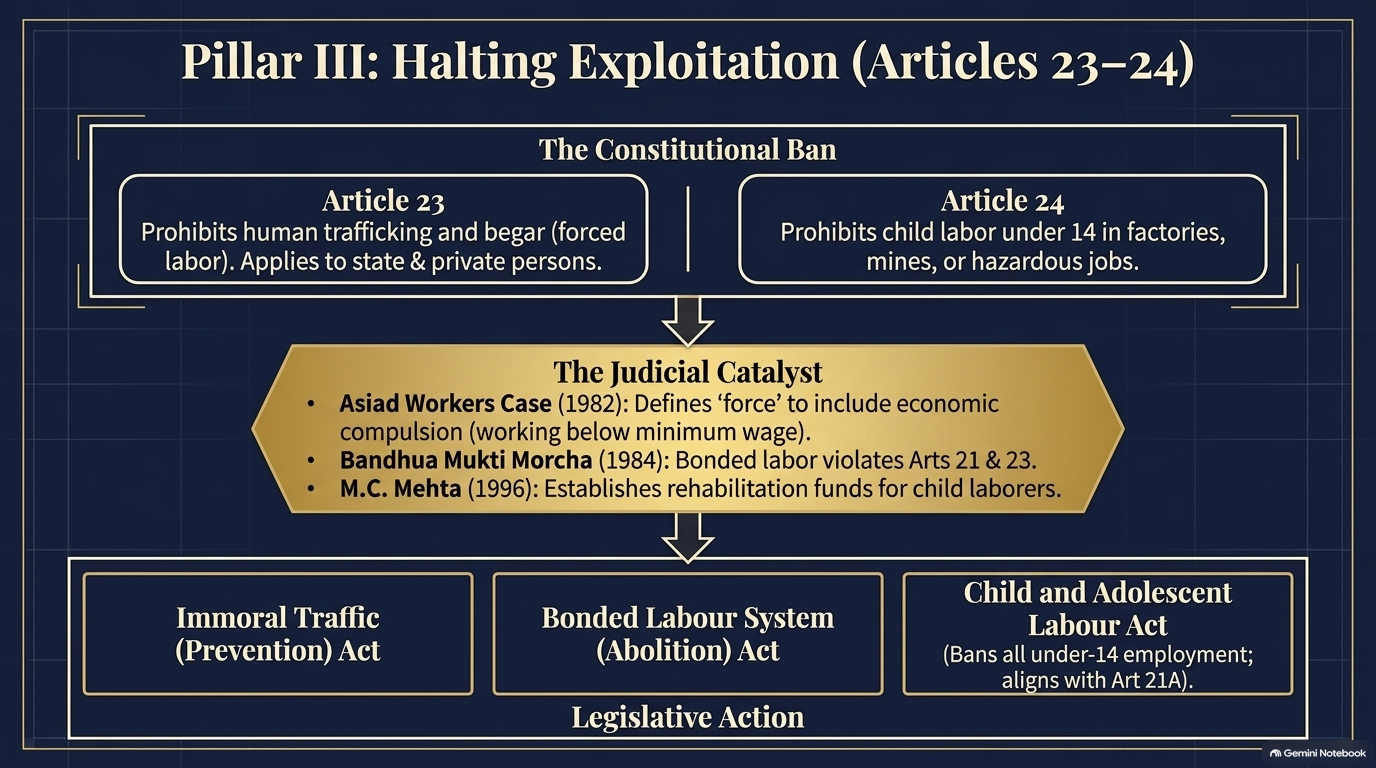
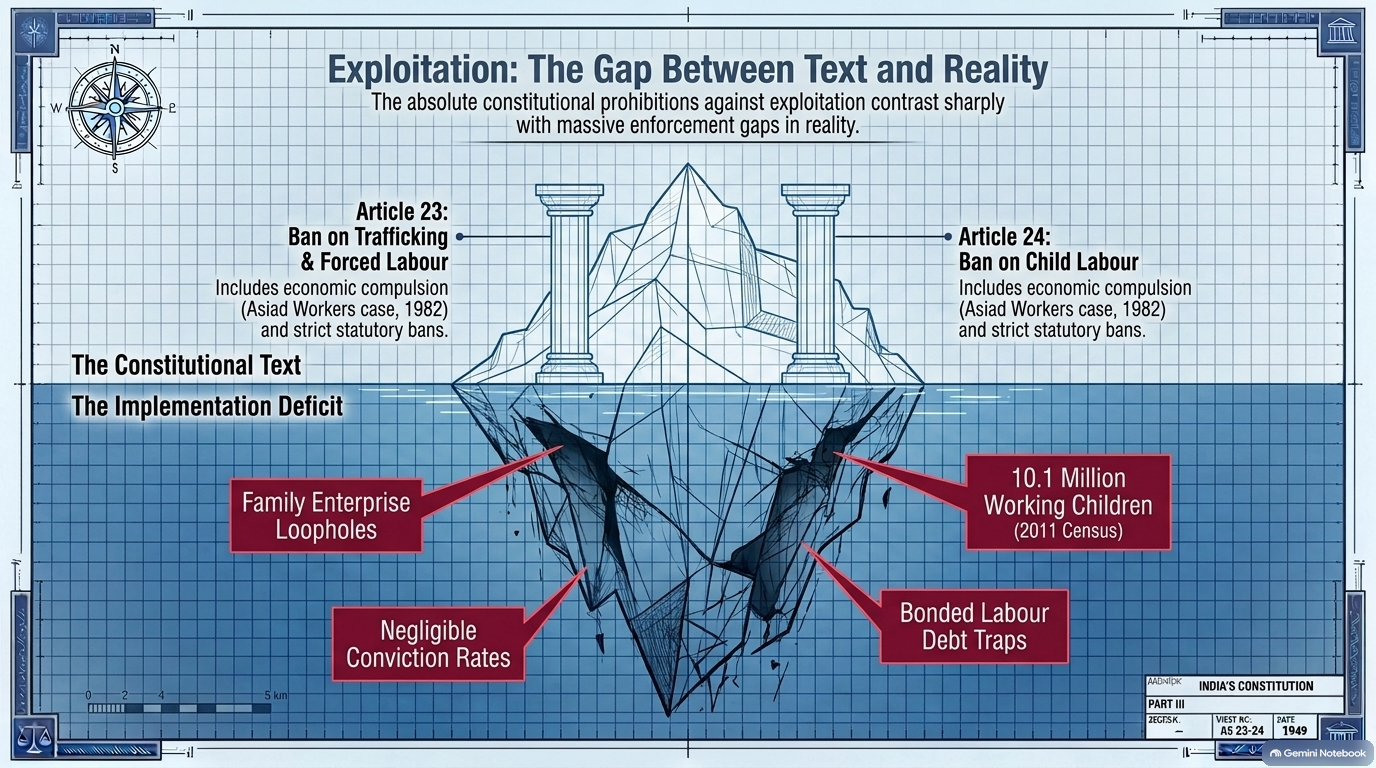
| Begar | A form of forced labour historically practiced in India where individuals were compelled to work without any remuneration. |
| Certiorari | A writ issued to a lower court or tribunal to quash an order that was made without jurisdiction or in violation of natural justice. |
| Constitutional Morality | A judicial concept used to prioritize constitutional values (like equality and dignity) over popular morality or traditional religious practices. |
| Doctrine of Eclipse | A principle where a pre-constitutional law that violates Fundamental Rights becomes “overshadowed” and dormant, rather than dead, and can revive if the constitutional inconsistency is removed. |
| Doctrine of Waiver | The legal principle that a citizen cannot voluntarily give up their Fundamental Rights, as these rights are a matter of public policy and not just individual benefit. |
| Ejusdem Generis | A rule of interpretation meaning “of the same kind,” which was famously rejected in the Rajasthan State Electricity Board case to broaden the definition of “State.” |
| Habeas Corpus | Literally “to have the body”; a writ requiring a person under arrest to be brought before a judge or into court, especially to secure the person’s release unless lawful grounds are shown for their detention. |
| Indemnify | To compensate or protect a person (such as a government servant) from legal liability for actions taken during extraordinary circumstances like martial law. |
| Justiciable | Subject to trial in a court of law; rights are justiciable if an individual can move the court for their enforcement upon violation. |
| Mandamus | A writ issued as a command to an inferior court or public authority to perform a specific public duty that they are legally required to do. |
| Martial Law | Military rule imposed in an area during extraordinary circumstances like war or rebellion, leading to the suspension of ordinary law and the restriction of Fundamental Rights. |
| Prohibition | A preventive writ issued to an inferior court to stop it from proceeding in a matter that is beyond its jurisdiction. |
| Quo Warranto | A writ issued to inquire into the legality of the claim which a person asserts to a public office, and to oust them if they are found to be a usurper. |
| Reasonable Restrictions | Limitations placed on Fundamental Rights (such as for public order or morality) that the State is permitted to impose, provided the courts find them non-arbitrary. |
| Sine Qua Non | An essential condition; specifically, the violation of a Fundamental Right is the necessary condition for exercising the right to move the Supreme Court under Article 32. |
| Writ | A formal written order issued by a court (Supreme Court under Article 32 or High Courts under Article 226) to enforce legal or fundamental rights. |