Directive Principles of State Policy

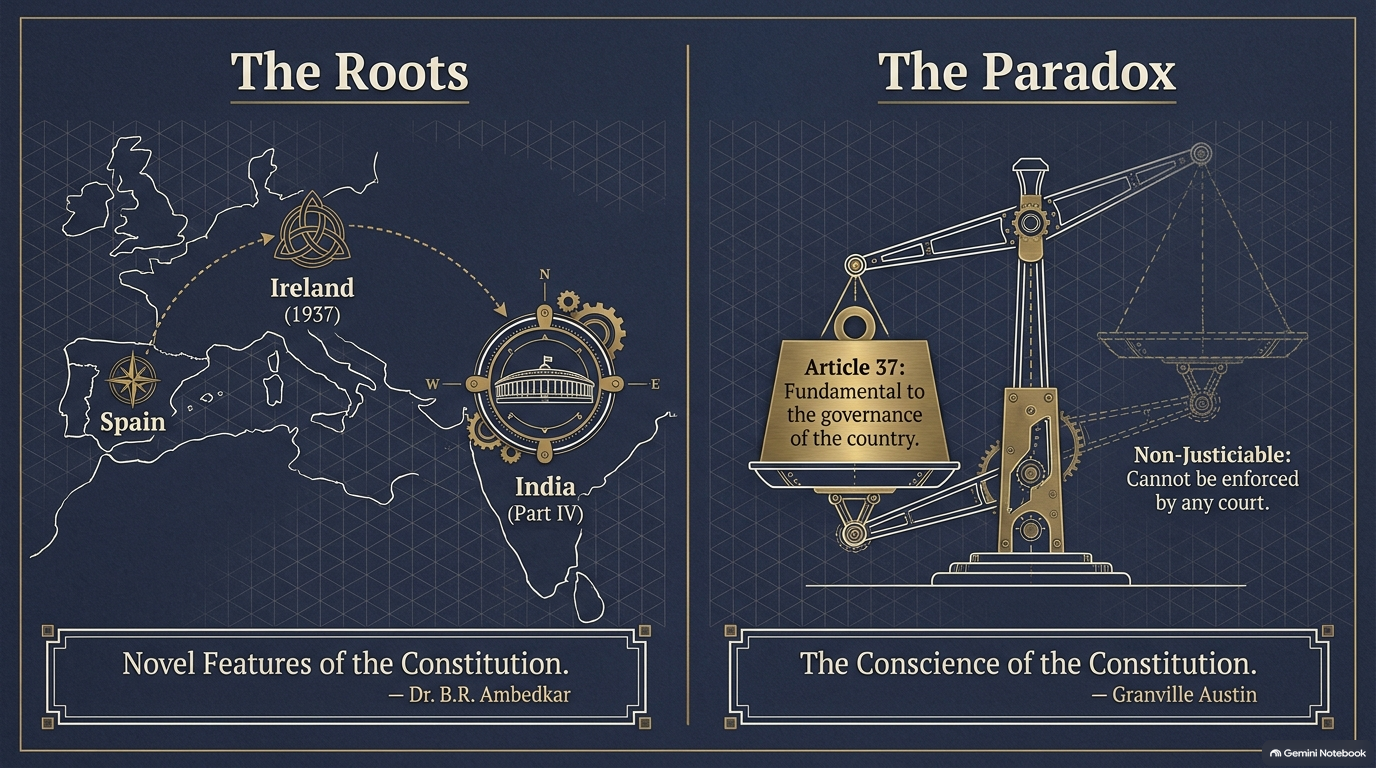
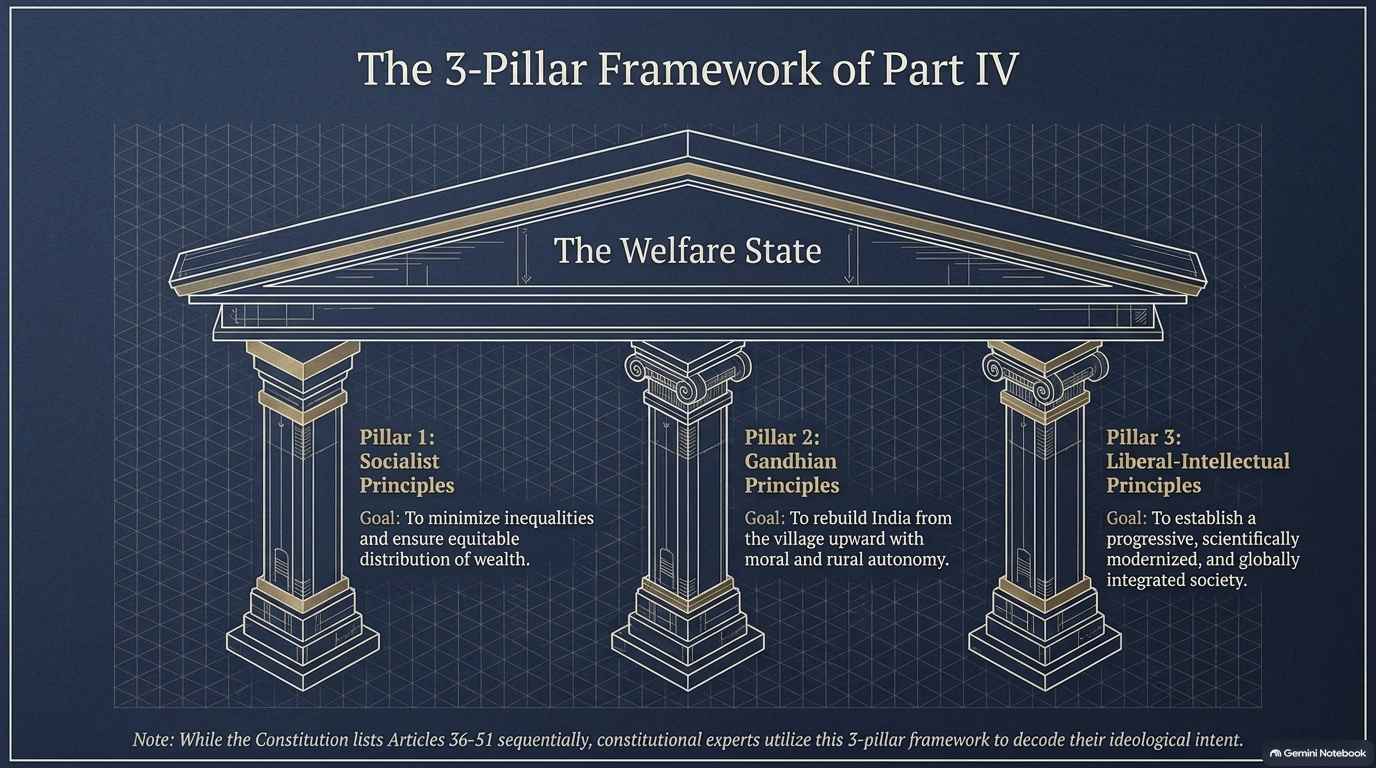

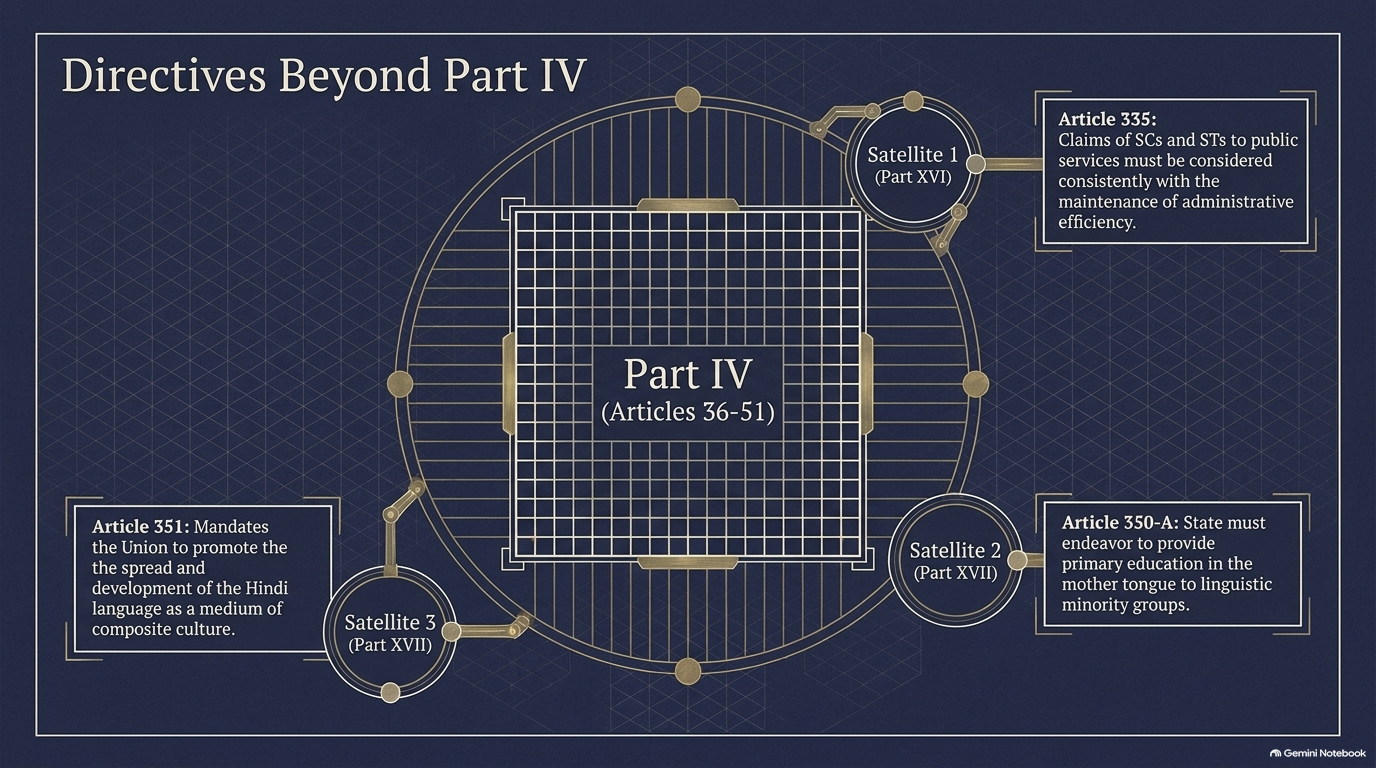


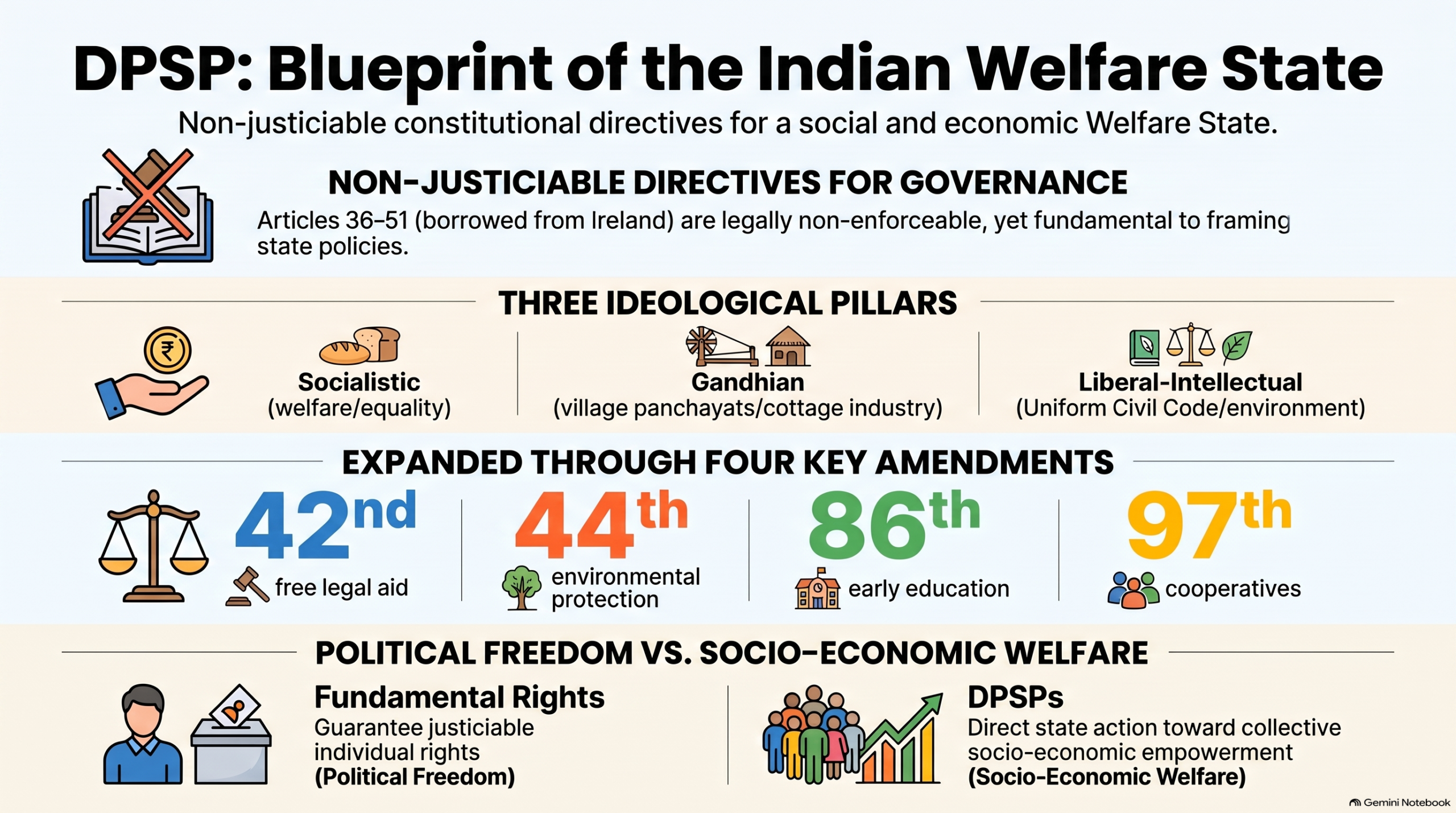
Directive Principles of State Policy are outlined in Part IV (Articles 36 to 51) of the Indian Constitution, drawing inspiration from the Irish Constitution. These guidelines are non-justiciable and cannot be enforced through courts, yet they remain fundamental to governance by directing the state to establish a welfare society focused on socio-economic justice. Scholars often categorize these directives into socialistic, Gandhian, and liberal-intellectual principles, noting that they have been expanded over time through various constitutional amendments. While Fundamental Rights generally take precedence during legal conflicts, the courts maintain a harmonious balance between individual liberties and collective welfare. Ultimately, these principles serve as a moral compass and a practical framework for shaping legislation, national policies, and administrative development across the country.
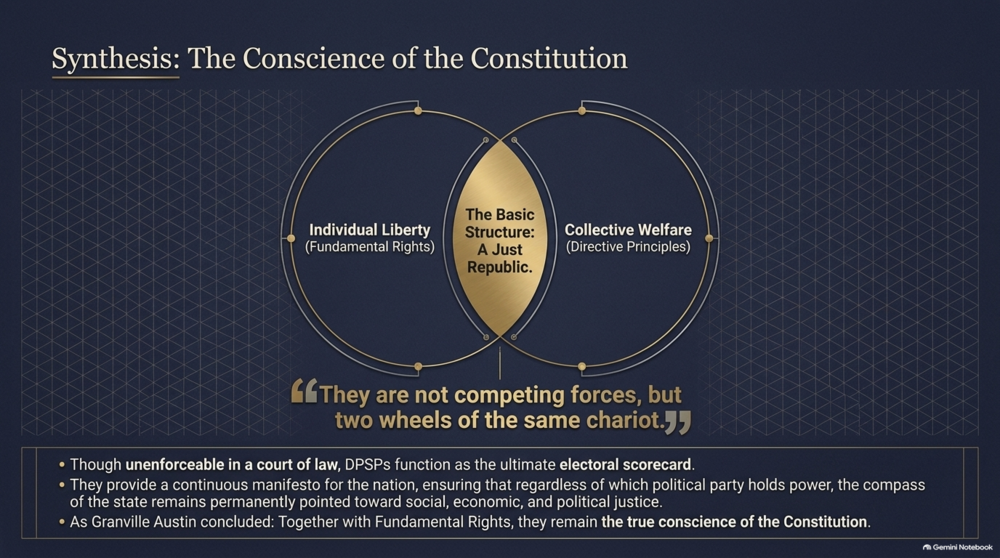
The relationship between Fundamental Rights (FRs) and Directive Principles of State Policy (DPSPs) has evolved from an initial judicial hierarchy to a framework of harmony and balance[1]. Together, constitutional scholar Granville Austin described Part III and Part IV as the **”Conscience of the Constitution”**[4][5].
1. Core Differences in Constitutional Role
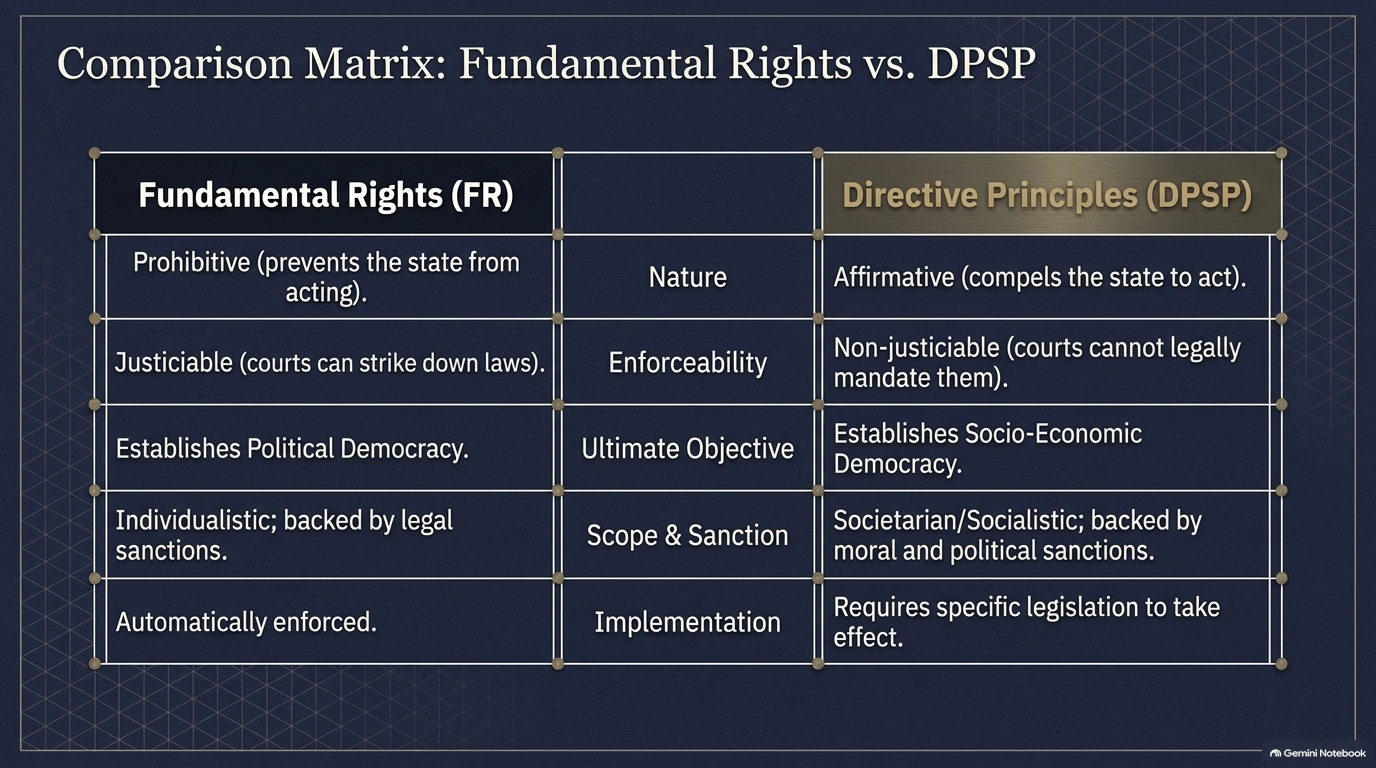
- Fundamental Rights (Part III, Articles 12–35): Aim to establish political democracy by guaranteeing individual liberties[6]. They operate primarily as negative obligations that restrict arbitrary state authority and are justiciable (enforceable by courts)[7][8].
- Directive Principles (Part IV, Articles 36–51): Aim to establish social and economic democracy and build a welfare state[7]. Under Article 37, DPSPs are positive directives that are non-justiciable (legally non-enforceable), but fundamental to the governance of the country[7].
2. Evolution of the Conflict & Judicial Precedents
The tension between individual rights (Part III) and collective social welfare objectives (Part IV) was shaped by key judicial verdicts and constitutional amendments:
- Champakam Dorairajan Case (1951): The Supreme Court held that in any conflict between Fundamental Rights and DPSPs, Fundamental Rights prevail[2]. DPSPs were treated as subsidiary to Part III, though Parliament retained the power to amend FRs to enact directive principles[2][11].
- Golaknath Case (1967): The Supreme Court ruled that Fundamental Rights are sacrosanct and cannot be abridged or amended by Parliament to implement DPSPs[2].
- 25th Constitutional Amendment Act (1971) & Article 31C: Parliament introduced Article 31C, providing that laws enacted to implement the socialistic directives under Article 39(b) and (c) (equitable distribution of material resources and prevention of concentration of wealth) cannot be declared void for violating Articles 14 (Equality) or 19 (Freedoms)[2].
- Kesavananda Bharati Case (1973): The Supreme Court upheld the constitutional validity of protecting laws under Article 39(b) and (c) against Articles 14 and 19, while establishing the Basic Structure Doctrine[2].
- 42nd Amendment Act (1976): Parliament attempted to give primacy to all DPSPs over Articles 14, 19, and 31[3].
- Minerva Mills Case (1980): The Supreme Court invalidated the expanded scope of Article 31C, restoring the balance between Part III and Part IV[1]. The Court held that the Constitution is founded on the bedrock of the balance between Fundamental Rights and Directive Principles, comparing them to **”two wheels of a chariot”**[1][3].
3. Present Legal Position
- Harmony over Hierarchy: Fundamental Rights and DPSPs are complementary and supplementary[2][3]. The goals set out by DPSPs must be achieved without abrogating the means provided by Fundamental Rights[1].
- Primacy of Article 39(b) & (c): Laws enacted specifically to implement Article 39(b) and Article 39(c) override Articles 14 and 19[2]. All other DPSPs remain subordinate to Fundamental Rights[3].
- Basic Structure Limit: Parliament can amend Fundamental Rights to implement Directive Principles, provided the amendment does not damage or destroy the Basic Structure of the Constitution[1].
- Judicial Interpretation (Harmonious Construction): When evaluating the constitutionality of a law under Articles 14 and 19, courts consider whether the law seeks to give effect to a DPSP as a measure of “reasonable restriction”[17]
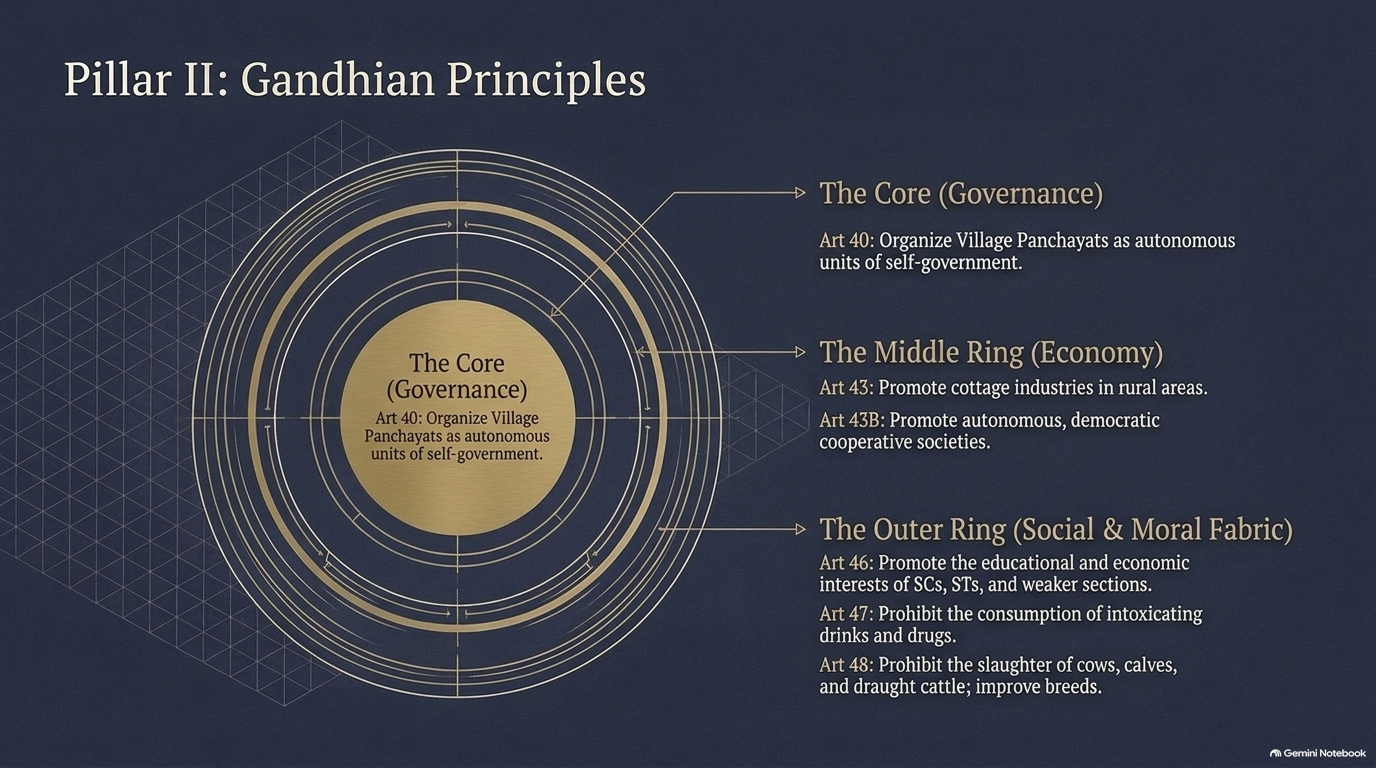
Although the Indian Constitution does not formally classify the Directive Principles of State Policy, constitutional scholars categorize several directives as Gandhian Principles based on Mahatma Gandhi’s vision of social reconstruction, rural self-reliance, decentralization, and moral governance[1].
Core Gandhian Principles in Part IV
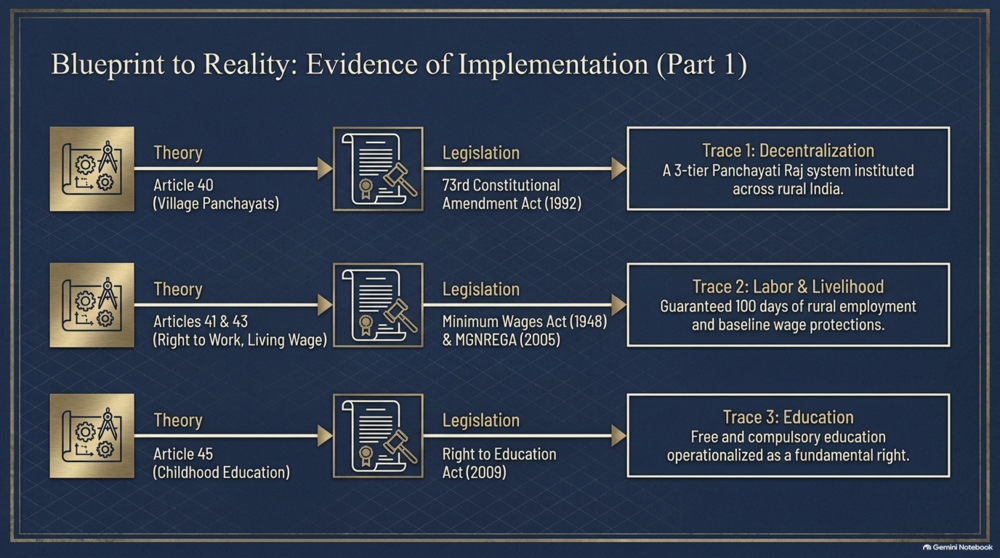
- Article 40 – Organization of Village Panchayats: Directs the State to organize village panchayats and endow them with the necessary powers and authority to enable them to function as units of self-government[1].
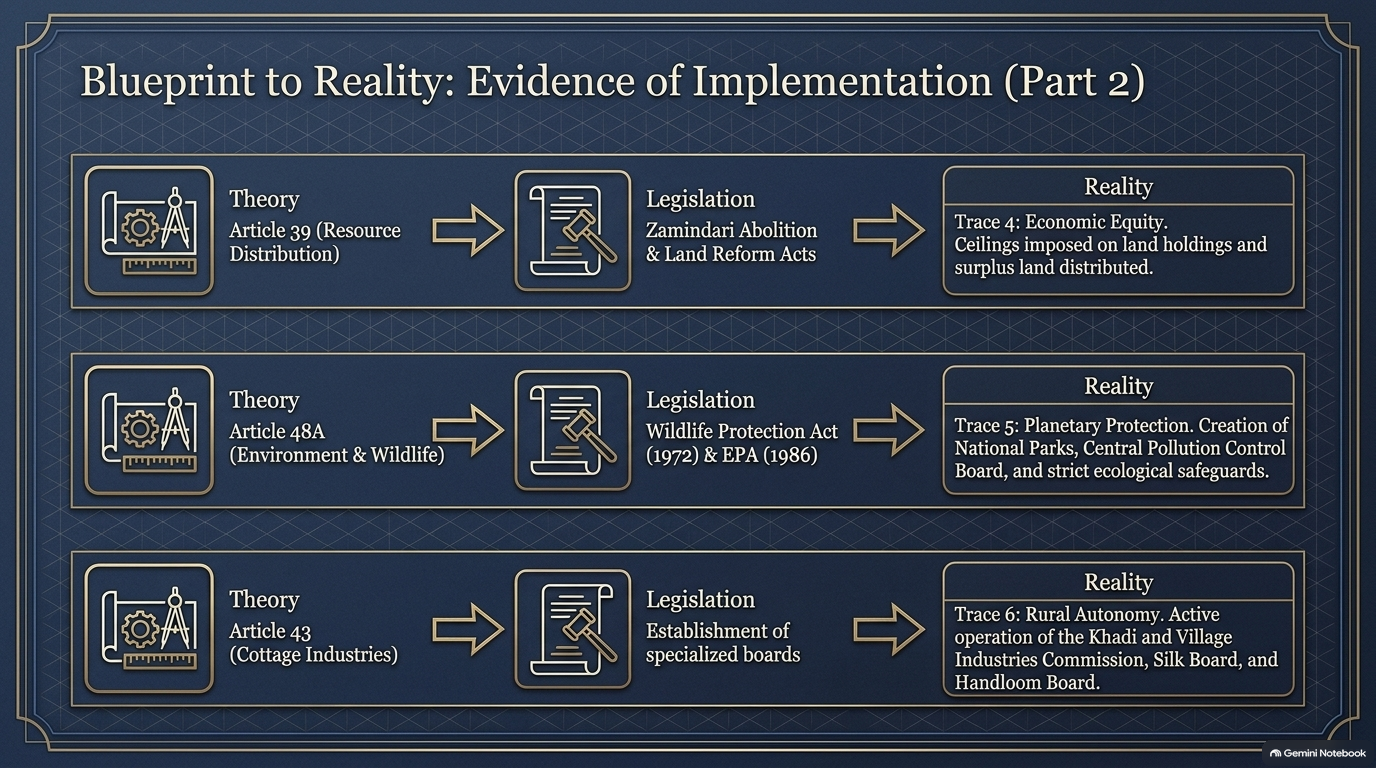
- Article 43 – Promotion of Cottage Industries: Mandates the State to promote cottage industries on an individual or cooperative basis in rural areas[1].
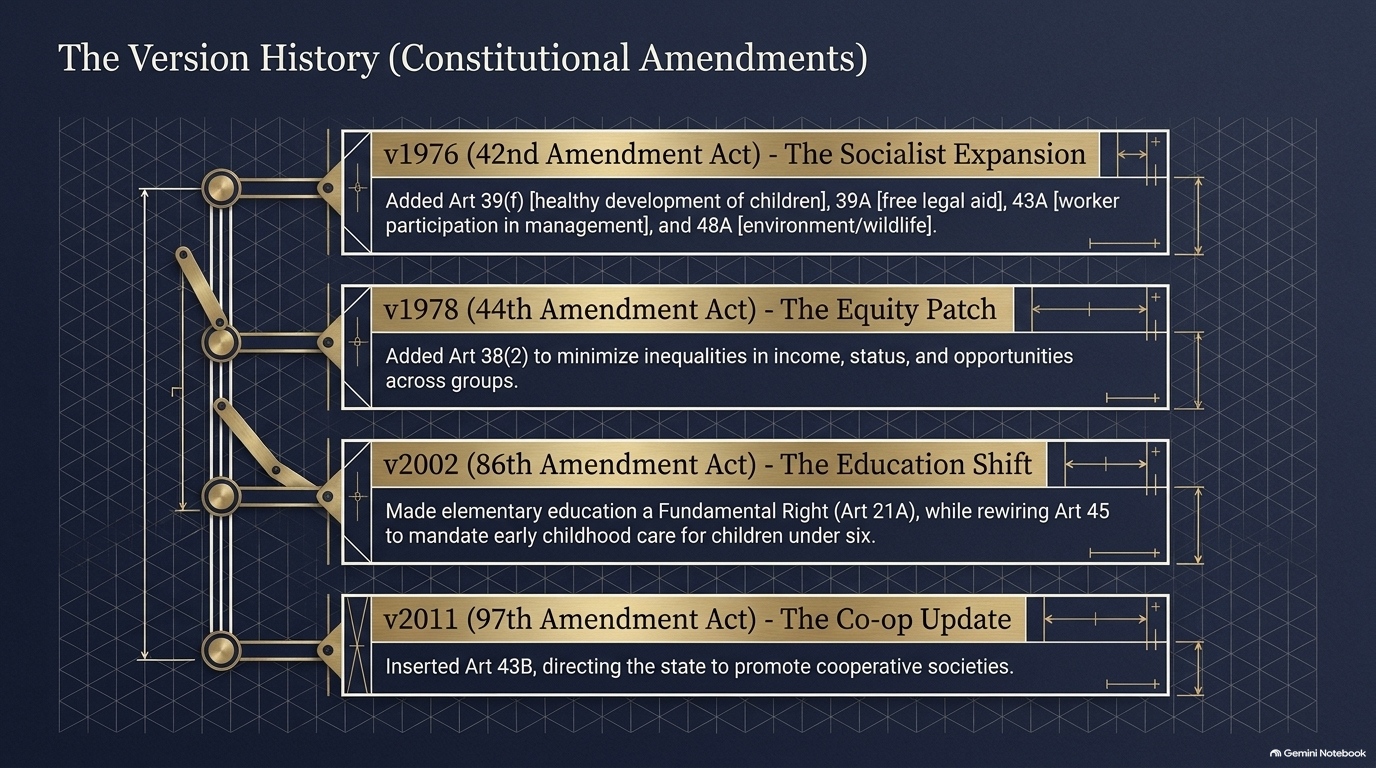
- Article 43B – Promotion of Cooperative Societies: Inserted by the 97th Constitutional Amendment Act of 2011, this directive requires the State to promote the voluntary formation, autonomous functioning, democratic control, and professional management of cooperative societies[1].
- Article 46 – Protection of SCs, STs, and Weaker Sections: Instructs the State to promote the educational and economic interests of Scheduled Castes (SCs), Scheduled Tribes (STs), and other weaker sections, while protecting them from social injustice and all forms of exploitation[1].
- Article 47 – Prohibition of Intoxicants: Directs the State to bring about the prohibition of the consumption of intoxicating drinks and drugs that are injurious to health[1].
- Article 48 – Protection and Improvement of Cattle Breeds: Mandates the State to prohibit the slaughter of cows, calves, and other milch and draught cattle, as well as take steps to improve their breeds[1].
Key Real-World Legislative & Policy Measures
The Indian State has operationalized these Gandhian ideals through major statutory interventions:
- Local Self-Governance: Enactment of the 73rd Constitutional Amendment Act of 1992, establishing a mandatory three-tier Panchayati Raj system across rural India[10].
- Rural & Cottage Industries: Formation of specialized bodies like the Khadi and Village Industries Commission (KVIC), Handicrafts Board, and Silk Board to support rural livelihoods[10].
- Protection of Vulnerable Groups: Enactment of the Scheduled Castes and Scheduled Tribes (Prevention of Atrocities) Act of 1989 alongside educational reservation policies[6].
- Health & Moral Directives: Implementation of state-level liquor prohibition laws (e.g., in Bihar and Gujarat) and national anti-drug legislations[6][13].
- Livestock & Agrarian Development: Schemes such as the Rashtriya Gokul Mission aimed at indigenous cattle breed development and protection
Although the Indian Constitution does not explicitly categorize the Directive Principles of State Policy (DPSP) within its text, constitutional scholars broadly group them into Socialist, Gandhian, and Liberal-Intellectual categories based on their content and ideological goals[1].
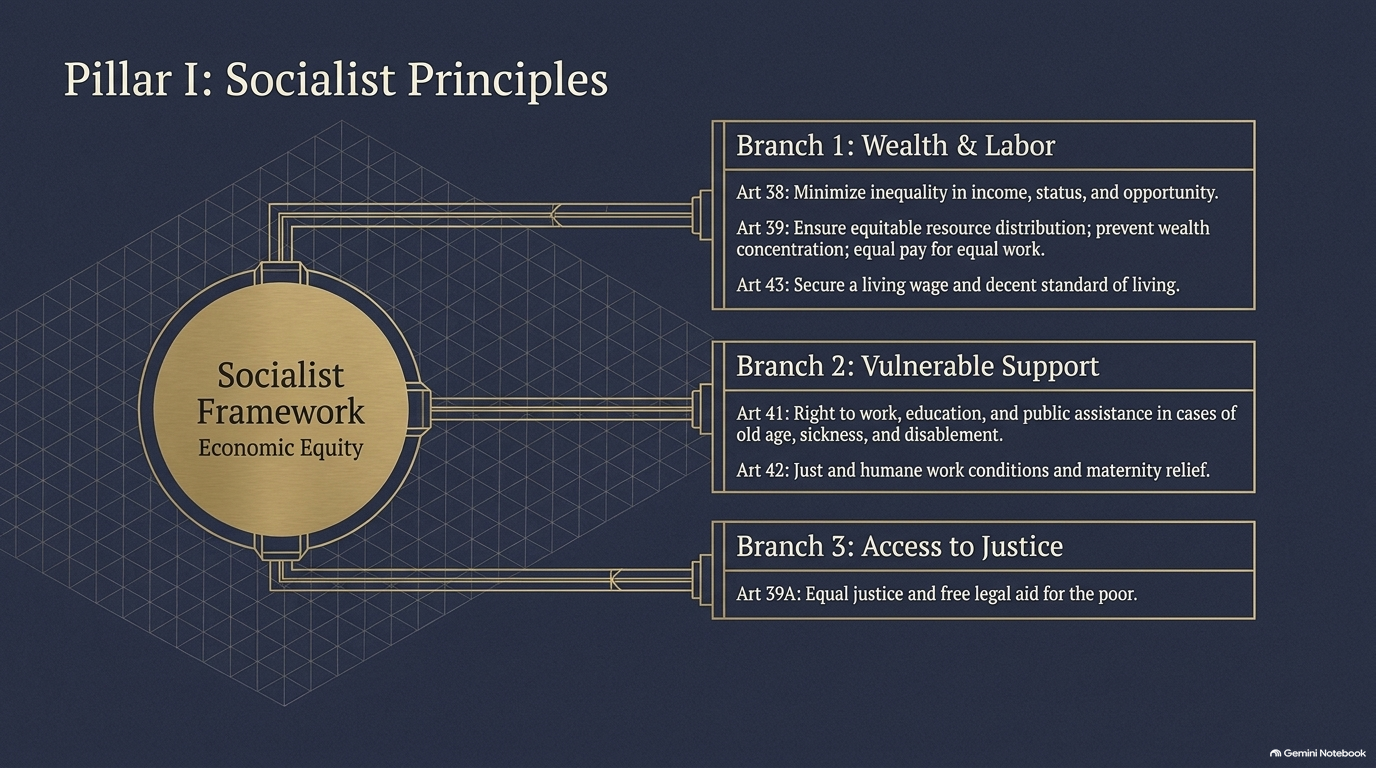
The Socialist Principles embody the ideology of democratic socialism, directing the State to establish a welfare state, eliminate socio-economic inequalities, and secure social, economic, and political justice for all citizens[3].
Core Socialist Articles in Part IV
- Article 38 – Promoting Public Welfare & Reducing Inequalities: Directs the State to promote the welfare of the people by securing a social order permeated by social, economic, and political justice[6]. It specifically mandates minimizing inequalities in income, status, facilities, and opportunities among individuals and groups[6].
- Article 39 – Socio-Economic Principles of State Policy: Requires the State to direct its policies toward securing:
- The right to an adequate means of livelihood for all citizens[8].
- Equitable distribution of material resources of the community for the common good[8].
- Prevention of concentration of wealth and means of production in a few hands[8].
- Equal pay for equal work for both men and women[8].
- Protection of the health and strength of workers and children against forcible abuse[8].
- Opportunities for the healthy development of children[12].
- Article 39A – Equal Justice and Free Legal Aid: Directs the State to promote equal justice and provide free legal aid to ensure that opportunities for securing justice are not denied to any citizen due to economic or other disabilities *(Added by the 42nd Constitutional Amendment Act, 1976)*[8].
- Article 41 – Right to Work, Education, and Public Assistance: Mandates the State to secure the right to work, education, and public assistance in cases of unemployment, old age, sickness, and disablement[8].
- Article 42 – Just and Humane Conditions of Work: Directs the State to make provision for securing just and humane conditions of work as well as maternity relief[8].
- Article 43 – Living Wage for Workers: Instructs the State to secure a living wage, a decent standard of living, and social and cultural opportunities for all agricultural and industrial workers[8].
- Article 43A – Worker Participation in Industrial Management: Mandates the State to take steps to secure the participation of workers in the management of undertakings, establishments, or other industrial organizations *(Added by the 42nd Constitutional Amendment Act, 1976)*[8].
- Article 47 – Raising Nutrition and Standard of Living: Directs the State to raise the level of nutrition, improve the standard of living of its people, and enhance public health[8].
Real-World Statutory & Legislative Implementations
The Indian government has translated these socialistic directives into concrete legislative and welfare measures:
- Employment & Livelihood: Enactment of the Mahatma Gandhi National Rural Employment Guarantee Act (MGNREGA), 2005 to guarantee the right to work (Article 41)[9].
- Wage & Labor Protection: Passage of the Minimum Wages Act (1948), Code on Wages (2020), and Equal Remuneration Act (1976) to enforce living wages and equal pay for equal work (Articles 39 & 43)[18].
- Legal Empowerment: Creation of the National Legal Services Authority (NALSA) under the Legal Services Authorities Act (1987) to deliver free legal aid to underprivileged citizens (Article 39A)[22].
- Maternity & Child Welfare: Implementation of the Maternity Benefit Act (2017), Pradhan Mantri Matru Vandana Yojana, and POSHAN Abhiyaan to protect working mothers and child health (Articles 39 & 42)[18].
- Food Security: Establishment of the Public Distribution System (PDS) and enactment of the National Food Security Act (2013) to ensure adequate living standards and nutrition (Articles 38 & 47)[7]
In the Indian Constitution, the relationship between Fundamental Rights (Part III, Articles 12–35) and Directive Principles of State Policy (Part IV, Articles 36–51) represents the tension and ongoing synthesis between individual liberties and collective social welfare[1]. Together, constitutional scholar Granville Austin described Part III and Part IV as the **”Conscience of the Constitution”**[4], while Dr. B.R. Ambedkar famously referred to DPSPs as the “novel features” of the Constitution[4].
1. Conceptual Distinction Between Part III and Part IV
According to the sources, the foundational distinction stems from the 1945 Sapru Committee’s recommendation to divide rights into justiciable and non-justiciable categories[11]:
- Nature & Enforceability: Fundamental Rights are negative obligations or restrictions that prohibit the State from infringing upon individual freedoms[3]. They are justiciable, meaning citizens can directly approach courts for their enforcement[3]. Conversely, Directive Principles are positive affirmative directions that require the State to act[3]. Under Article 37, DPSPs are fundamental in governance, but non-justiciable (legally non-enforceable by courts)[5].
- Democratic Vision: Fundamental Rights aim to establish political democracy by safeguarding individual liberty[3]. Directive Principles aim to establish social and economic democracy to build a welfare state[3].
2. Historical Conflict & Judicial Evolution
The judicial dynamic between FRs and DPSPs evolved across key court judgments and constitutional amendments[26]:
- Champakam Dorairajan Case (1951): The Supreme Court ruled that in any conflict between Fundamental Rights and Directive Principles, Fundamental Rights prevail[22]. DPSPs were regarded as subsidiary to Part III[27]. However, the Court noted that Parliament could amend Fundamental Rights through constitutional amendments to give effect to DPSPs[22].
- Golaknath Case (1967): The Supreme Court reversed its stance, ruling that Fundamental Rights hold a sacrosanct/transcendental position and cannot be abridged or amended by Parliament even to implement Directive Principles[22].
- 25th Constitutional Amendment Act (1971) & Article 31C: Parliament responded by introducing Article 31C, which provided that laws enacted to implement the socialistic directives under Article 39(b) and (c) (equitable distribution of resources and prevention of wealth concentration) cannot be declared void for violating Articles 14 (Equality), 19 (Freedoms), or 31 (Right to Property)[22].
- Kesavananda Bharati Case (1973): The Supreme Court upheld the constitutional validity of the first clause of Article 31C (giving Article 39(b) and (c) precedence over Articles 14 and 19)[29]. However, it struck down the second clause that barred judicial review, establishing the Basic Structure Doctrine[22].
- 42nd Constitutional Amendment Act (1976): Parliament attempted to extend the protection of Article 31C to cover all Directive Principles, giving them legal supremacy over Articles 14, 19, and 31[23].
- Minerva Mills Case (1980): The Supreme Court struck down the expanded scope of Article 31C as unconstitutional because giving absolute primacy to DPSPs over FRs damaged the Basic Structure of the Constitution[22]. The Court declared that the Indian Constitution is founded on the bedrock of the balance between Fundamental Rights and Directive Principles, famously comparing them to **”two wheels of a chariot”**[28].
3. Present Legal Position
- Harmony over Primacy: Fundamental Rights and Directive Principles are complementary and supplementary to each other[17]. The goals set by DPSPs must be achieved without destroying the means provided by Fundamental Rights[37].
- Limited Exception (Article 39(b) & (c)): Laws passed specifically to implement Article 39(b) and Article 39(c) enjoy primacy over Articles 14 and 19[28]. All other DPSPs remain subordinate to Fundamental Rights[29][35].
- Basic Structure Limit: Parliament has the power to amend Fundamental Rights to implement Directive Principles, provided the amendment does not violate or alter the Basic Structure of the Constitution[9].
- Harmonious Construction in Judicial Review: Courts regularly rely on DPSPs to determine the “reasonableness” of restrictions imposed on Fundamental Rights under Articles 14 and 19, upholding laws that give effect to directive principles whenever possible
Under Article 37 of the Indian Constitution, the Directive Principles of State Policy (DPSPs) are explicitly declared non-justiciable, meaning they are legally non-enforceable by courts and citizens cannot approach the judiciary to demand their immediate compliance[1].
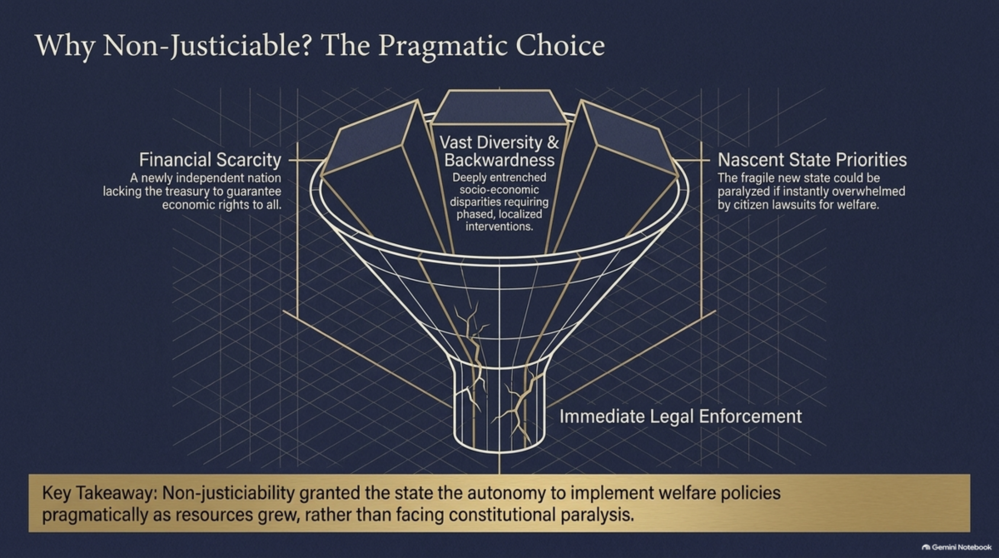
The framers of the Constitution made a deliberate decision to keep Part IV non-enforceable due to several historical, economic, and practical governance factors[3]:
Core Reasons for Non-Justiciability
- Recommendation of Sir B.N. Rau & Sapru Committee (1945): Drawing from the 1945 Sapru Committee’s suggestion to bifurcate rights, Constitutional Advisor Sir B.N. Rau recommended categorizing rights into justiciable rights (Fundamental Rights in Part III protecting civil/political liberties) and non-justiciable principles (DPSPs in Part IV guiding socio-economic goals)[4].
- Insufficient Financial Resources: At the time of independence, India faced acute financial scarcity and lacked the economic capacity to immediately guarantee broad socio-economic rights—such as public assistance, living wages, or adequate livelihoods—to all citizens as legally enforceable entitlements[3].
- Socio-Economic Diversity and Backwardness: Widespread poverty, illiteracy, regional disparities, and immense social diversity made immediate, uniform legal enforcement across the entire nation practical impossible[3].
- Administrative Burden & Post-Partition Priorities: The newly independent Indian state was burdened with immediate survival priorities, partition turmoil, and limited administrative capacities, making a phased, piecemeal implementation through statutory laws more practical[3].
- Legislative Discretion & Flexibility: Non-justiciability grants Parliament and State Legislatures the autonomy and flexibility to prioritize, design, and time welfare schemes according to evolving economic conditions and available resources[3].
- Preventing Judicial Overreach and Overburden: Making socio-economic objectives justiciable would have forced courts to direct state budgetary allocations and governance priorities, overburdening the judiciary and leading to constant litigation over policy choices[8].
Political and Moral Sanctions Over Legal Enforceability
Although DPSPs lack legal remedies in courtrooms, Article 37 establishes that these principles are “fundamental in the governance of the country” and places a constitutional duty on the State to apply them in making laws[1].
As Dr. B.R. Ambedkar noted, the primary force behind DPSPs is political and moral sanction rather than judicial enforcement: a government resting on popular vote cannot afford to ignore these directives without answering to the electorate at election time[8]

